Every home video creator hits the same wall. The footage looks decent, but the audio sounds like it was recorded inside a parking garage.
A shotgun microphone seems like the obvious fix. Dozens of YouTube gear reviews will point you toward one. But a shotgun mic solves exactly one problem, and buying the wrong one for your room can leave your audio sounding worse than a cheap lavalier.
The question worth asking about shotgun microphones for home video has nothing to do with brand names. It has everything to do with how far your mic sits from your mouth and what your walls are made of.
This is the part that gear reviews skip: the $59 accessory that changes your sound more than a $400 mic upgrade ever could.
How Shotgun Mics Work and Why Distance Wrecks Everything
A shotgun microphone uses an interference tube design to reject sound coming from the sides. That tube is why shotguns sound more focused than standard condenser mics. The longer the tube, the tighter the rejection pattern.
But that focused pickup has a catch. It only works well when the mic is close to the sound source.
Push the mic more than a few feet from your mouth and you start collecting room reflections, air conditioning hum, and that weird hollow tone that screams “amateur video.”
Short vs. Long Interference Tubes
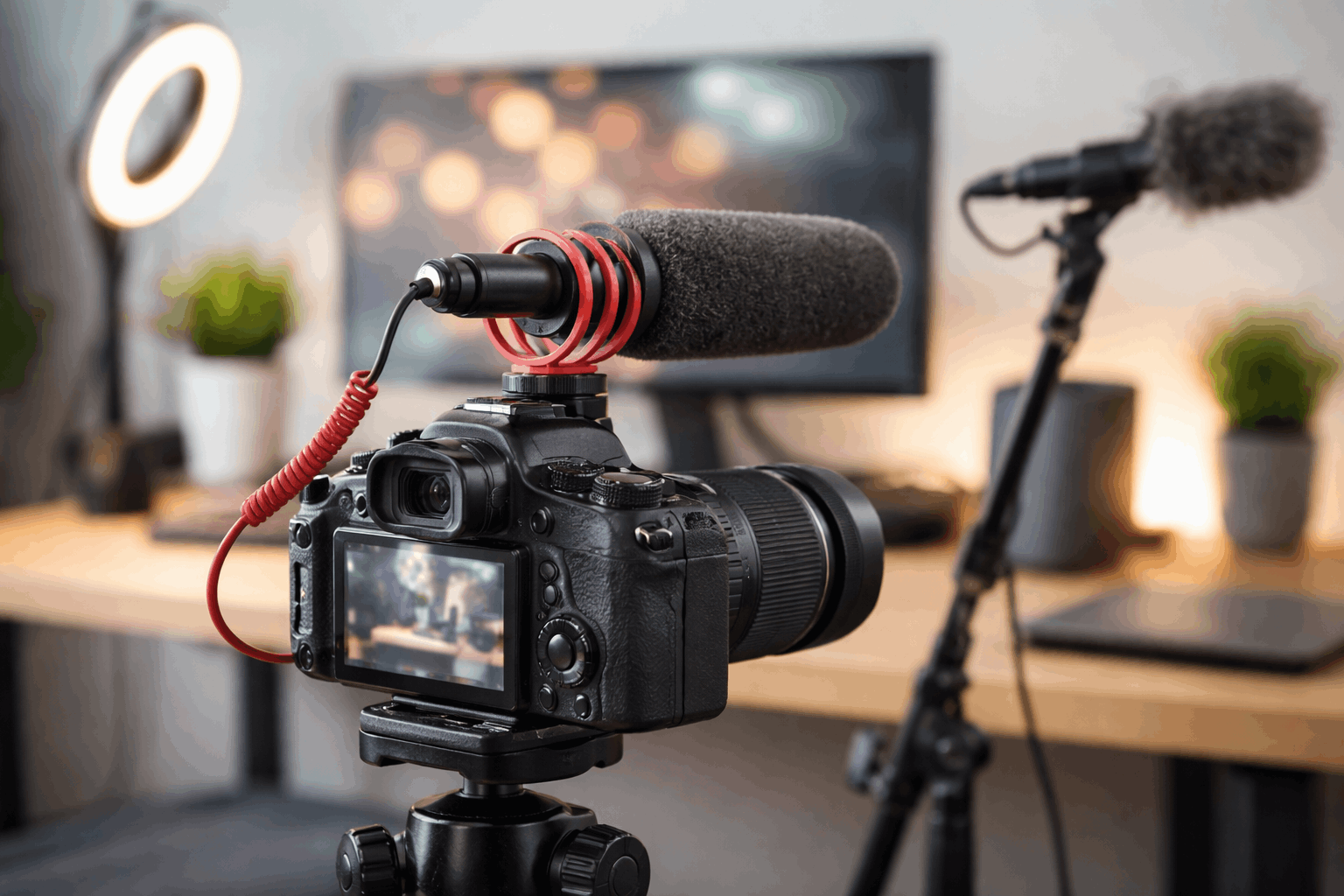
Shorter shotgun tubes (the ones that fit on camera hot shoes) are easier to handle and position. They reject less off-axis noise, but they also behave more naturally in small rooms with hard surfaces.
Longer tubes reject more side noise, which sounds great on paper. The trade-off: in a reflective bedroom or home office, that longer tube can make off-axis sound behave unpredictably.
Voices pick up a metallic quality that no amount of EQ will fix. So matching the mic to your room matters more than chasing the longest tube on the shelf.
The Placement Rule That Beats Every Upgrade
I would take a $49.95 Deity V-Mic D4 Mini on a boom arm 18 inches from my face over a $734.30 Sennheiser MKH 416 bolted to a camera tripod across the room. That price gap is almost $700. And the cheaper mic placed close will sound cleaner every single time.
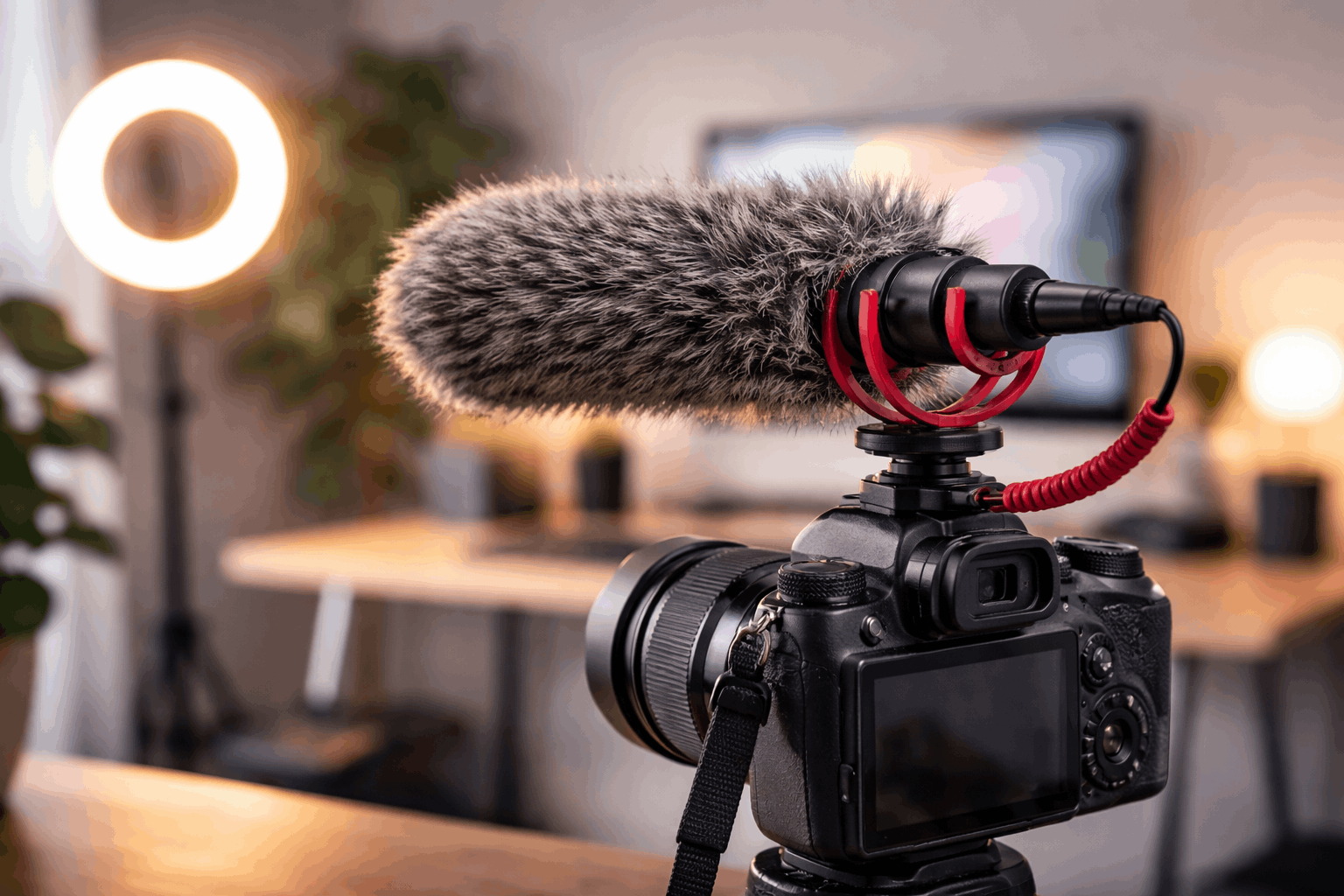
A practical rule for home creators: keep the shotgun mic within a few feet of the subject. Every extra foot of distance adds room tone that the mic pattern cannot filter out.
Three Setups Where Shotgun Mics for Home Video Pay Off
Not every home shoot benefits from a shotgun mic. But three common setups match how these mics are designed to work, and the results can be worth the investment when the placement is right.
Talking-Head Videos on a Tripod
This is the bread-and-butter use case. Mount a short shotgun just out of frame on a small boom, angle it down toward your chin, and the mic captures clean voice audio without appearing on screen.
The proximity does the heavy lifting. A RØDE VideoMicro II at $79.00 handles this job well for creators on a tight budget.
Overhead Desk Recording for Tutorials
Desk creators who film product demos or screen tutorials often hate having a large broadcast mic blocking the camera’s view.
A short shotgun on a boom arm solves this: the mic stays close to your mouth, angled down from above, while your desk stays clear. This setup works particularly well for channels focused on tech reviews or craft tutorials.
Two-Person Interviews (With a Big Caveat)
A shotgun mic can work for two-person dialogue if both speakers sit at a consistent distance and angle. But the moment one person leans back or turns sideways, audio balance falls apart.
I think two lavalier mics or two dynamic mics are a safer bet for interviews, based on the distance and angle problems that shotguns create once two people sit more than a couple feet apart.
When a Shotgun Mic Will Disappoint You
The flip side is just as important. Some situations will make even an expensive shotgun mic sound mediocre, and no amount of post-production will rescue the recording.
These are the common deal-breakers for home creators thinking about a shotgun mic purchase:
- The mic stays mounted on the camera across the room. Audio will sound hollow and distant. The mic may still beat a built-in camera microphone, but the improvement often feels thin for the money spent.
- The room has bare walls, tile floors, or hard ceilings. Reflections bounce around the space, and a shotgun cannot erase them. A $20 rug and some thick curtains will improve audio more than swapping to a better mic.
- The shoot happens outdoors in wind. Wind noise overpowers the mic’s pickup pattern. At that point, the quality of your windshield and shock mount matters far more than the capsule inside the mic body.
That last point connects to something almost every gear guide overlooks: the accessories you pair with a shotgun mic can change your results more dramatically than the mic itself.
Also read: How to Fix Harsh Shadows in Home Videos
Shotgun Mic Accessories: The Overlooked Budget That Changes Everything
Home creators routinely spend $200 or $300 on a microphone and then skip the $59 boompole that would let them place it correctly.
This is backwards thinking, and I think it explains why so many creators post disappointed reviews about mics that are perfectly capable.
A few accessories worth pricing out before upgrading the mic itself:
- Furry windshield (example: RØDE DeadCat VMP+ at $39.00): eliminates wind noise and reduces fan noise from AC units or computers running nearby.
- Shock mount (example: Rycote InVision Universal at $87.95): absorbs bumps, cable tugs, and small vibrations that create low-frequency thumps in recordings.
- Basic boompole (example: RØDE Micro Boompole at $59.00): the single accessory that makes close placement possible without cluttering your camera frame.
- Extension cable (example: RØDE VC1 10-foot 3.5mm cable at $18.00): bridges the gap when your camera sits far from where the mic needs to be.
That shock mount alone costs $87.95. So a creator buying a $189 Audio-Technica AT875R should budget another $100 to $150 for mounting and wind protection. Ignoring this budget is the single fastest way to end up disappointed with an otherwise solid mic.
Shotgun Microphone Price Comparison for Home Video (2026)
Price tags shift constantly, so treat this table as a snapshot based on current retail listings rather than permanent pricing.
| Category | Model | Best Use | Price (USD) |
|---|---|---|---|
| Budget on-camera | Deity V-Mic D4 Mini | Camera/phone rigs | $49.95 |
| Budget on-camera | RØDE VideoMicro II | Run-and-gun, compact setups | $79.00 |
| Mid on-camera | Sennheiser MKE 400 (2nd Gen) | Camera/phone, more control | $149.00 |
| Mid hybrid (USB + camera) | RØDE VideoMic NTG | Camera + computer workflows | $209.95 |
| Budget XLR | Audio-Technica AT875R | Home dialogue on boom | $189.00 |
| Mid XLR | Sennheiser MKE 600 | Home dialogue, flexible power | $299.00 |
| Pro XLR | RØDE NTG5 | Location sound | $489.20 |
| Industry standard | Sennheiser MKH 416 | Film and TV production | $734.30 |
The pattern is clear: jumping from the $79 to the $149 tier adds useful features like gain control and a tighter pattern.
But jumping from $299 to $734 gets you into professional film territory where the gains only show up in controlled production environments, not in a spare bedroom.
Picking the Right Shotgun Mic for Your Specific Workflow
Choosing between these categories depends on three things: how much gear you want to carry, whether your workflow includes a computer as a recording device, and how close you can get the mic to your subject.
On-Camera Mics for Speed and Simplicity
An on-camera mini shotgun plugs into your camera’s 3.5mm input and rides on the hot shoe. Setup takes about 30 seconds.
For casual vlogs, travel content, or any shoot where the camera stays within arm’s reach, this category can be “good enough” without adding complexity. The Deity V-Mic D4 Mini and RØDE VideoMicro II both live here.
XLR Shotguns for the Biggest Audio Jump
The single biggest improvement in dialogue quality comes from getting a shotgun off the camera and onto a boom arm.
An XLR shotgun like the Audio-Technica AT875R at $189 paired with an audio interface or portable recorder and a basic boompole from RØDE gives you professional-sounding voice capture at a fraction of film-set pricing.
Hybrid Mics for Computer-Based Creators
The RØDE VideoMic NTG at $209.95 works as both an on-camera mic and a USB microphone.
Creators who record directly into software like OBS, Riverside, or any DAW can skip buying a separate audio interface. The trade-off is that you lose some flexibility compared to a dedicated XLR setup.
Questions People Ask About Shotgun Microphones for Home Video
Q: Can a shotgun mic pick up sound from across the room?
A shotgun mic does not “zoom in” on distant sound the way a telephoto lens zooms into a distant subject. The interference tube rejects side noise, but it still collects room tone at distance. Keeping the mic within a few feet is the only reliable fix.
Q: Are shotgun mics better than lavalier mics for home video?
It depends on placement flexibility. A lavalier clips directly to clothing and stays consistently close, which makes it more forgiving in echo-heavy rooms. A shotgun needs careful positioning but keeps the mic out of frame entirely, which suits creators who want a cleaner visual look.
Q: Do I need phantom power for a shotgun microphone?
Only for XLR shotgun mics. On-camera 3.5mm models draw power from the camera’s mic input. XLR models like the Sennheiser MKE 600 can run on phantom power from an interface or on an internal AA battery, giving some flexibility depending on your rig.
Q: What is the biggest mistake beginners make with shotgun mics?
Buying an expensive mic and leaving it on the camera hot shoe across the room. That placement collects too much room sound regardless of the mic’s quality. Spend on a boompole or arm first, then upgrade the mic later once placement is sorted.
Q: Are budget shotgun mics good enough for YouTube?
A $49.95 to $79.00 on-camera shotgun placed close to the subject can produce audio that sounds professional enough for YouTube content. The mic’s price matters less than its distance from your mouth and the acoustic treatment in your room.
Conclusion
Placement decides 80% of your shotgun mic’s audio quality, regardless of what you spend on the capsule. Accessories like boompoles and shock mounts deserve budget priority over premium mic upgrades for home creators.
A $79 mic on a boom arm three feet away will consistently beat a $700 mic sitting on a camera across the room. Start with close placement, add room treatment, and let the mic do the easy part.