A scratchy, echoey voice track will tank your video faster than a blurry thumbnail. And the mic sitting on your desk right now probably isn’t doing you any favors.
The lavalier vs condenser microphone debate fills up forums and YouTube comments. But the answers keep recycling the same surface-level breakdown every time.
Nobody talks about the one factor that matters more than mic specs: the room you’re recording in. That single detail changes which microphone type wins for your setup.
So let’s break this down by how home creators work in 2026, not how studio engineers think about gear.
How a Lavalier Microphone Works for Home Video
The appeal of a lavalier mic comes down to distance. Because the mic clips inches from your mouth, the ratio between your voice and background noise tilts hard in your favor.
That physics advantage is the reason broadcast journalists and documentary filmmakers have relied on lavs for decades. The same principle applies in your spare bedroom.
Lav Mics and Untreated Rooms
A lavalier microphone placed 6 to 8 inches from your mouth captures a “close voice” signal. The room sound (echo off walls, hum from an AC unit, the neighbor’s dog) gets pushed into the background naturally.
Hard walls, tile floors, big windows: these are the enemies of clean audio. A lav handles all of them without requiring you to buy acoustic foam or hang moving blankets.
I think the BOYA BY-M1 at $16.99 is the single best first mic purchase a home creator can make, and I’d pick it over any USB condenser under $100 in an untreated room.
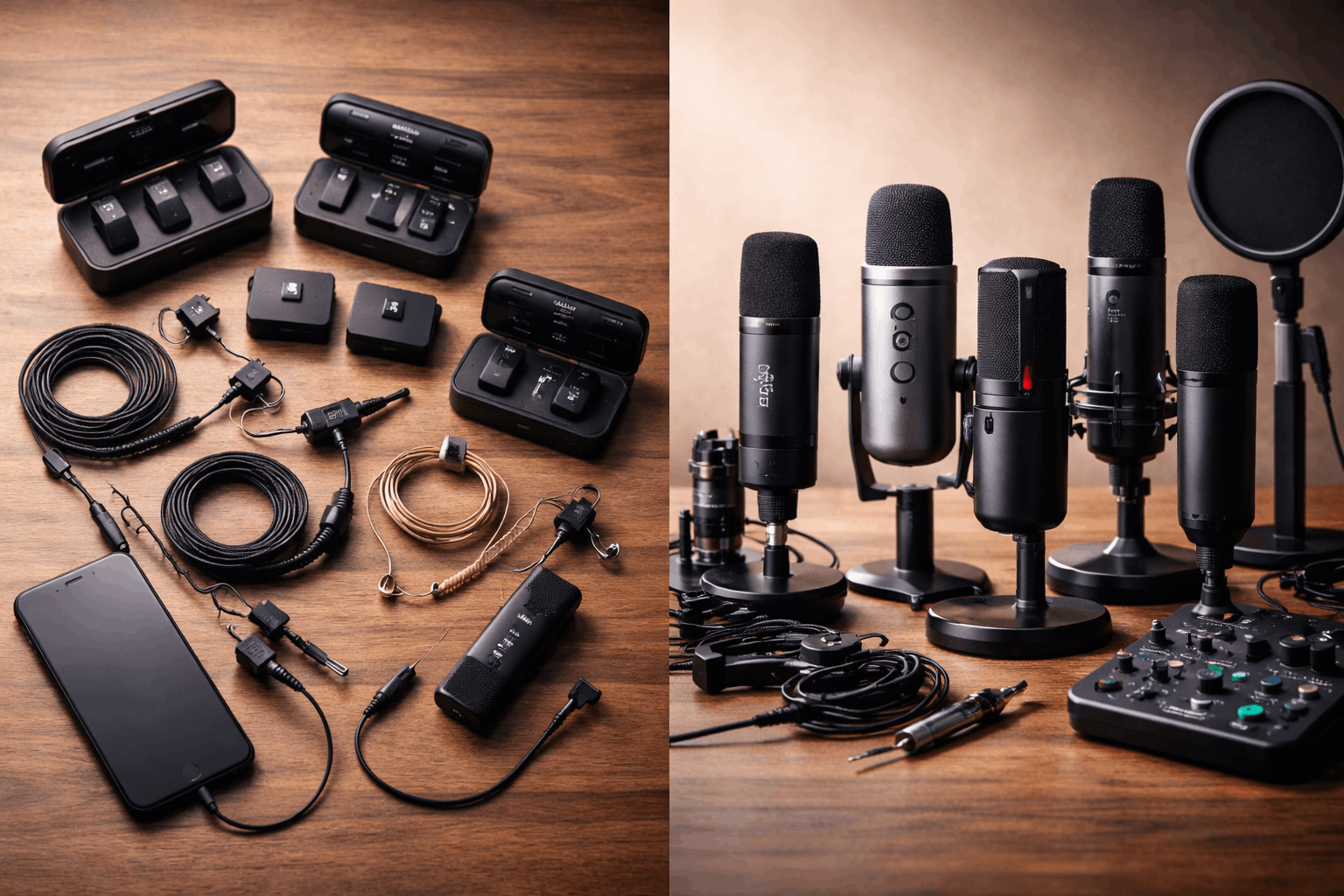
The Trade-offs of Wearing a Mic
Lav mics aren’t invisible. Clothing rustle is real, especially with synthetic fabrics or stiff collars. Cable management takes a minute of setup each time you film.
Wireless lav systems like the DJI Mic 2 ($269.99) or the RØDE Wireless GO II ($263.99) solve the cable problem but add battery checks, pairing steps, and occasional wireless interference.
That said, both systems record backup audio internally, which is a safety net wired lavs can’t offer.
Who Benefits the Most from a Lav
The list of creators who should default to a lavalier first is longer than most articles suggest:
- Cooking channels, product reviewers, and anyone who stands up and moves during filming
- Course creators who use a whiteboard or demonstrate physical steps on camera
- Two-person interviews where each speaker needs a separate mic channel
- Creators filming in spaces they can’t control, like rental apartments or shared offices
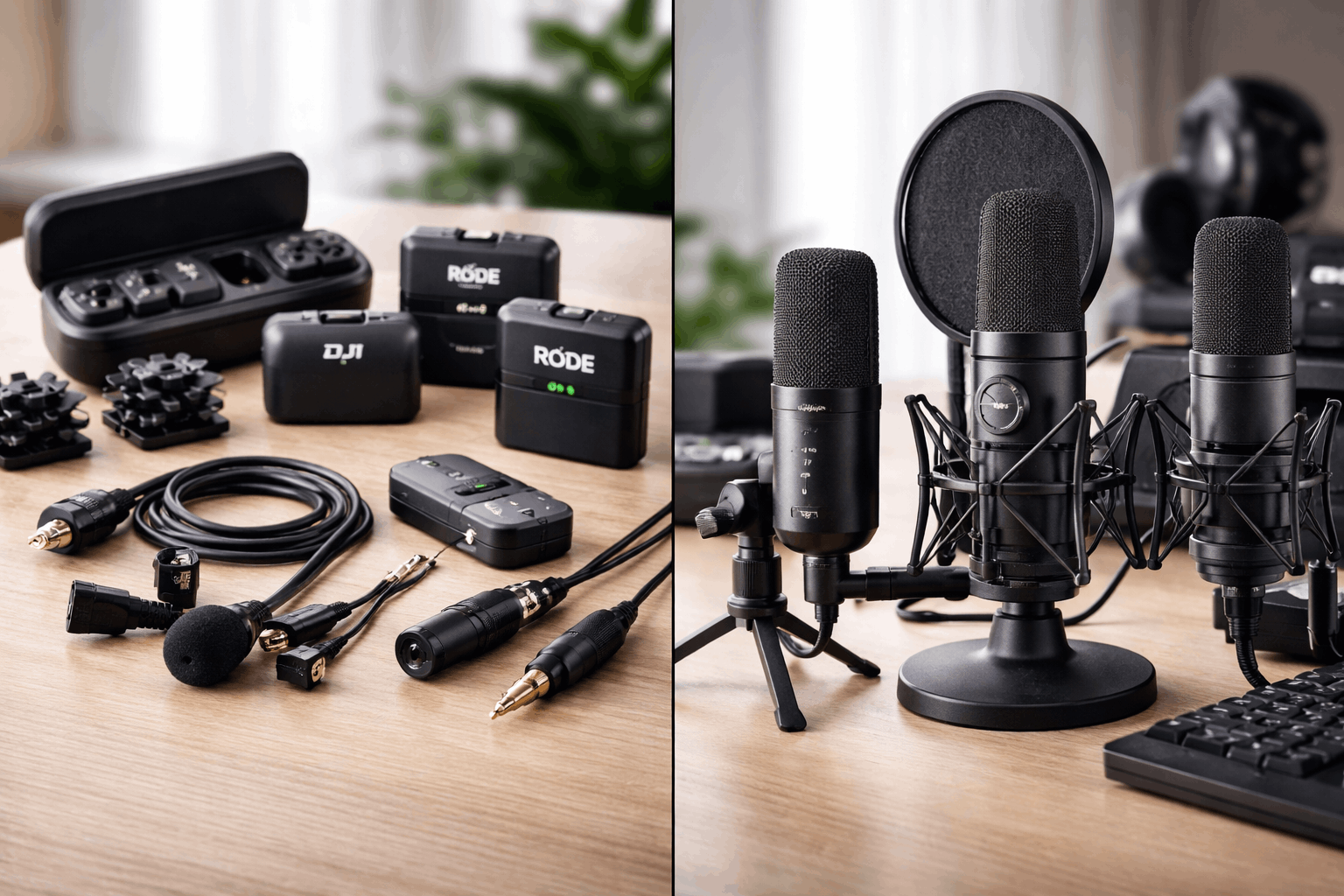
How a Condenser Microphone Works at a Desk
A condenser microphone captures a wider frequency range than most lavs. Voice texture, the subtle low-end warmth, the breath control in a narrator’s delivery: condensers pick up these details because their diaphragm is more sensitive.
That sensitivity is both the selling point and the trap.
Also read: Shotgun Microphones for Home Video: Are They Worth It?
The Room Problem Nobody Warns About
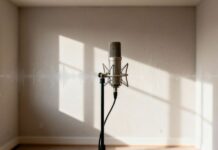
A condenser mic doesn’t just hear your voice. It hears everything. The fridge compressor two rooms away. The keyboard clicks during a livestream. A car passing outside.
I would skip any condenser mic if my room has bare walls and hard flooring. The Audio-Technica AT2020 at $119 sounds fantastic in a treated space. Put it in a reflective bedroom, and you’ll spend more time fighting reverb in post than editing your content.
That distinction matters because nearly every “best microphone for creators” list ranks condensers at the top without mentioning that the ranking assumes a quiet, soft-furnished room.
USB vs XLR Condensers for Home Setups
Connection type is a separate decision from mic type, and mixing them up wastes money.
USB condensers plug straight into a computer. The FIFINE K669B ($29.99), Blue Yeti ($97), and Elgato Wave:3 ($119.99) all work this way. No extra gear needed. Plug in, set levels, record.
XLR condensers need an audio interface (a separate box that converts the analog signal to digital). The Audio-Technica AT2020 XLR ($119) is a solid entry point here, but the interface adds another $50 to $150 on top.
If your workflow is computer-only (podcasting, streaming, voiceover), USB makes sense. If you plan to expand into multi-mic recording or music production later, XLR gives you room to grow. The RØDE NT1 5th Gen ($246.99) covers both connections in one mic, which is a smart hedge if you’re unsure.
Lavalier vs Condenser Microphone: Sound Compared Side by Side
The difference between these two mic types shows up most clearly when you compare them across the same recording conditions. This table uses real-world home scenarios, not controlled studio tests.
| Factor | Lavalier Mic | Condenser Mic |
|---|---|---|
| Untreated room performance | Strong, because close placement reduces room echo | Weak, picks up reverb and ambient noise |
| Voice richness and detail | Slightly thinner sound on budget models | Fuller frequency range, more vocal texture |
| Movement freedom | High, clipped to clothing | Low, must stay within 6 to 12 inches of mic |
| Background noise rejection | Good by default due to proximity | Poor unless room is quiet and soft-furnished |
| Setup time | 1 to 2 minutes (clip and check levels) | 3 to 5 minutes (position arm, set gain, check room) |
| Starting price for usable audio | $16.99 (BOYA BY-M1) | $29.99 (FIFINE K669B) |
The takeaway: condenser mics reward preparation, while lavs reward simplicity.
The Question Every Creator Should Ask First
Most mic comparison articles start with “what sound do you want?” That’s the wrong first question.
The right first question is: can you control your recording space?
If the answer is no (rental apartment, shared house, street noise, echoey room), a lavalier microphone will produce cleaner audio with less effort. Period.
I would take the Shure MVL at $69 over the Blue Yeti at $97 in any room with hard walls, and the Shure would win the audio comparison every time in that context.
If the answer is yes (dedicated office, rugs on the floor, curtains on windows, door that closes), a condenser starts making sense. And it can sound incredible.
The second question is about content format:
- Do you stand, walk, or demonstrate things on camera? Lav wins.
- Do you sit at a desk for every recording? Condenser wins.
- Do you do both? Own both. A $17 wired lav and a $30 USB condenser cost less combined than one mid-range wireless system.
Starter Mic Picks for Home Creators in 2026
Gear recommendations date fast, so here are picks based on current street prices that should hold through the year.
Best Lavalier Mics by Budget
The wired lav space has a clear value leader. The BOYA BY-M1 ($16.99) is the cheapest real upgrade from a built-in camera mic. The RØDE Lavalier II ($95.92) is a step up for creators who want cleaner dialog and lower handling noise.
For wireless, the Hollyland LARK M2 Duo at $85 is the lowest-cost two-person wireless kit for iPhone creators. The DJI Mic 2 system at $269.99 is the strongest all-around wireless kit for run-and-gun video, with internal recording as a backup.
Best Condenser Mics by Budget
At entry level, the FIFINE K669B ($29.99) and Blue Yeti ($97) cover the basics. The HyperX QuadCast 2 ($111.99) and Elgato Wave:3 ($119.99) add quick-mute buttons and software mixing, which streamers care about.
For creators who want the cleanest USB voice possible, the RØDE NT-USB+ ($179.95) is a strong mid-range pick with a built-in headphone output for real-time monitoring.
Questions People Ask About Lavalier vs Condenser Microphones
Q: Can I use a lavalier microphone for podcasting?
Absolutely. A lav works for podcasting as long as it’s clipped properly and your recording software can handle the input. The audio won’t be as warm as a condenser, but the trade-off is zero room echo. Budget lavs like the BOYA BY-M1 record cleaner podcast audio than a condenser in a bad room.
Q: Do condenser microphones pick up typing sounds?
They do, and it’s one of the biggest complaints from streamers. Mechanical keyboards are especially loud through a condenser. A boom arm that positions the mic close to your mouth and away from the desk helps, but it won’t eliminate the sound completely.
Q: Is a wireless lavalier mic worth the extra cost?
It depends on how much you move. A wired lav at $17 to $70 handles stationary or lightly mobile filming just fine. Wireless systems in the $85 to $270 range make sense for creators who walk around, film outdoors, or record two-person content regularly.
Q: Should I buy a condenser mic if my room is noisy?
I’d say no. A condenser in a noisy room will capture every ambient sound alongside your voice, and cleaning that up in post-production is tedious. A lavalier mic placed close to your mouth is a faster, cheaper fix than acoustic treatment plus a condenser.
Q: What’s the best budget microphone for a new home creator?
The BOYA BY-M1 at $16.99 (lavalier) or the FIFINE K669B at $29.99 (condenser) are the two lowest-cost options that produce genuinely usable audio. The right pick between them comes down to whether you move during filming or sit at a desk.
Conclusion
The microphone that matches your room and content format will always outperform expensive gear in the wrong setting. Lavalier mics solve noisy rooms and movement; condensers reward quiet, controlled desk setups with richer vocal detail.
Spend fifteen minutes testing your room’s echo and ambient noise before spending a dollar on any mic. That single test will tell you more than any spec sheet or review ever could.