Buying a portable microphone feels simple until you open ten tabs, compare specs that mean nothing to you, and still end up guessing. That frustration is the real problem here.
Every “best portable mic” list ranks products by price tiers without asking what you shoot or where. That approach sells gear. It doesn’t solve your audio problems.
I think the best portable microphone for a creator who films at home and on trips is rarely the one with the flashiest specs. It’s the one that works the second you press record.
This guide breaks portable mics into the categories that matter: wireless clip-ons, phone-first mics, camera mics, and backup recorders. Each one fits a different workflow.
What to Check Before Buying a Portable Microphone
The microphone itself is only half the purchase. What kills a creator’s setup is the stuff around the mic: adapters, cables, windscreens, and stands that weren’t in the budget.
A $99 wireless mic that needs a $30 adapter and a $15 windscreen is a $144 mic. Think about that number, not the one on the box.
Compatibility deserves your attention first. A mic built for 3.5mm camera inputs won’t work on your USB-C phone without an adapter, and cheap adapters introduce noise. Ask one question before anything else: does this plug directly into the device I use?
Here’s what should be on your checklist before ordering:
- Connection type: match to your main device (USB-C for phones, 3.5mm for cameras, USB for laptops)
- Solo or dual: a two-transmitter wireless kit costs more upfront but saves money if you plan interviews later
- Onboard recording: internal backup recording protects entire shoots if wireless signal drops
- Wind handling: a $5 dead cat windscreen changes outdoor audio quality drastically
- Monitoring: being able to hear yourself through headphones while recording catches problems live instead of in the edit
Why Monitoring Matters More Than Audio Quality Specs
Almost every mic comparison focuses on frequency response and bit depth. Those specs matter.
But the single feature that saves the most ruined footage is real-time monitoring: plugging headphones into your receiver and hearing what the mic actually picks up.
I would pick a $184.99 RØDE Wireless GO II with headphone monitoring over a technically “better” mic without it, because no amount of post-production fixes silence where your audio should be.
A mic that lets you hear a problem during the shoot is worth more than a mic that records problems at higher fidelity.
Best Wireless Clip-On Microphones for Travel
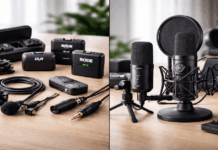
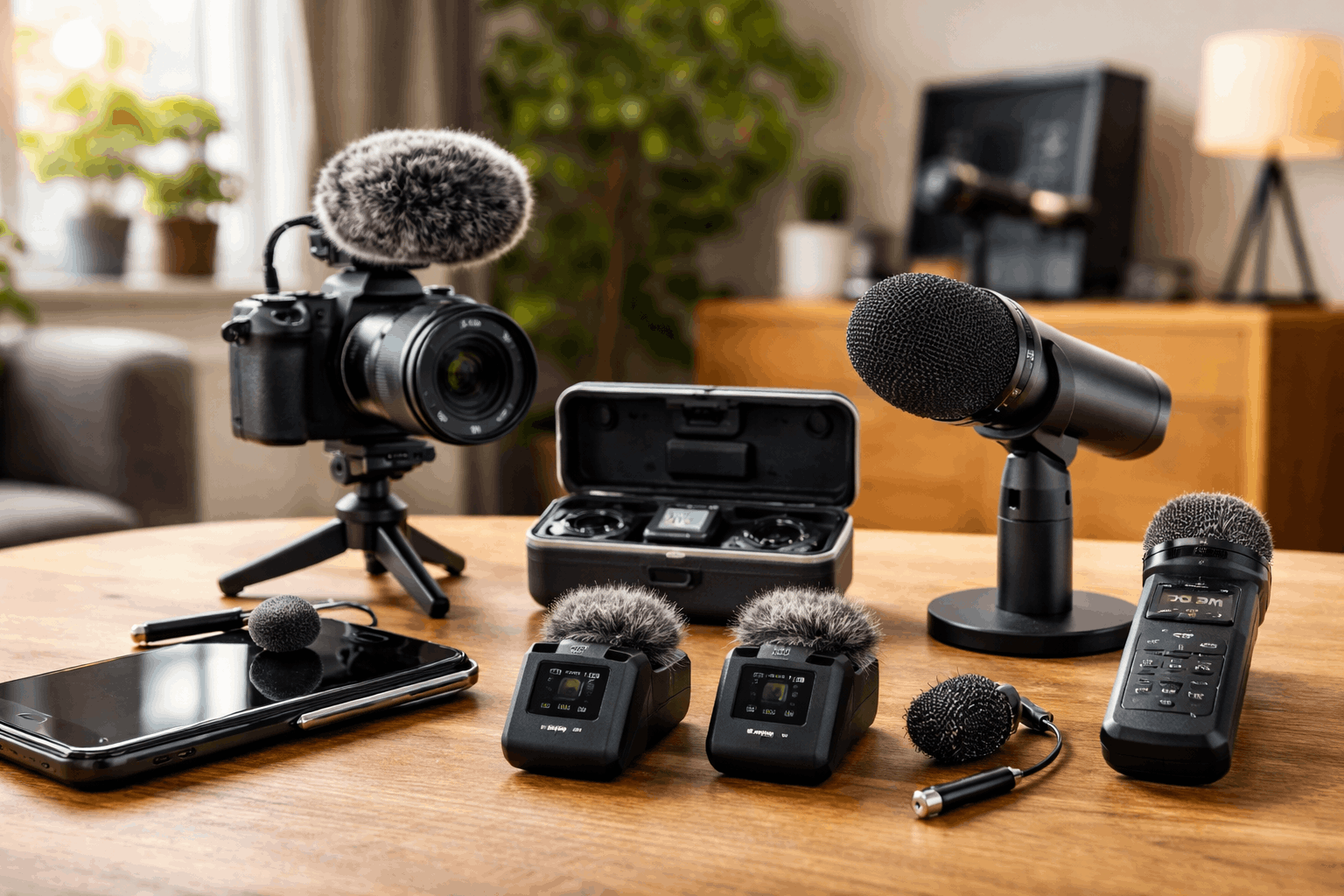
Wireless clip-on mics are the workhorse category for creators who move between locations. The three options below cover different budgets, but they all share one trait: they clip to a shirt, connect to a receiver, and let you record without cables running across your body.
DJI Mic 2: The “Forget About It” Safety Net
The DJI Mic 2 two-transmitter kit costs $269 through the DJI Store. A single-transmitter version runs $179 for solo creators. The standout feature is 32-bit floating-point internal recording, which means each transmitter records its own audio file as a backup.
Why does that matter? If your wireless signal glitches on a busy street, the internal recording still has clean audio.
The 32-bit float format also means clipping is practically impossible, so you don’t need to nail your gain levels on location. That’s a huge deal for run-and-gun travel shooting where stopping to adjust levels isn’t realistic.
RØDE Wireless GO II: Consistent and Widely Available
The RØDE Wireless GO II two-person kit lists at $184.99 on B&H. It records up to 7 hours of uncompressed audio on each transmitter, which functions as a safety net similar to the DJI Mic 2’s internal recording.
This is the mic I see in the most creator kits, and the reason is boring: it works, it’s small, it pairs fast, and it’s stocked everywhere.
Boring reliability matters when you’re on a trip and need a replacement cable or accessory from a local camera store. RØDE’s availability gives it a practical edge that doesn’t show up on spec sheets.
Hollyland Lark M2: Budget Wireless That Doesn’t Feel Cheap
The Hollyland Lark M2 costs $99 through the Hollyland Store. That’s roughly half the price of the RØDE Wireless GO II. Battery life runs around 30 hours total using the charging case and transmitters combined.
For creators doing casual social media content or short-form clips, this mic hits a price point where wireless becomes accessible without a big financial commitment. The tradeoff: fewer accessories and less aftermarket support compared to RØDE or DJI.
| Feature | DJI Mic 2 (2TX) | RØDE Wireless GO II | Hollyland Lark M2 |
|---|---|---|---|
| Price | $269 | $184.99 | $99 |
| Internal Recording | 32-bit float | 7 hrs uncompressed | No |
| Transmitters Included | 2 | 2 | 2 |
| Battery (est. total w/ case) | ~12 hrs | ~7 hrs | ~30 hrs |
The Hollyland wins on battery and budget, the DJI wins on recording safety, and the RØDE wins on availability and ecosystem support.
Also read: Best Lighting Setups for Home Video Recording
Best Phone-First Portable Microphones
Phone mics solve a specific problem: quick audio upgrades without pairing transmitters, charging cases, or carrying a receiver. Plug in, record, done.
Shure MV88 USB-C: Plug-In Simplicity
The Shure MV88 USB-C lists at $159 and plugs directly into USB-C phones and tablets. It includes Auto Level Mode and a real-time denoiser, which means the mic adjusts gain and cleans up background noise without extra software.
I think the Shure MV88 USB-C at $159 is underpriced for what it does, because it removes three steps from the recording process: no pairing, no charging a second device, and no gain adjustments.
That simplicity matters more than people realize when they’re trying to film a quick piece to camera between flights.
Shure MV88+ Kit: The Packaged Mobile Setup
The Shure MV88+ kit lists at $279 on Sweetwater and comes with a phone mount and small tripod in a single package. If the idea of assembling your own phone rig sounds tedious, this kit removes that decision entirely.
The $120 price difference between the MV88 USB-C and the MV88+ kit is mostly paying for the mount, tripod, and convenience of a matched set. Decide if those accessories are worth it by checking what you already own.
Best Portable Microphones for Cameras
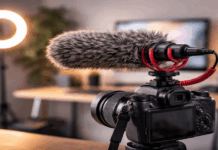
Camera mics belong in a different mental category than wireless clip-ons. These sit on top of your camera’s hot shoe and pick up sound from a fixed position, which makes them ideal for B-roll narration and quick setups where clipping a lav to your shirt feels like overkill.
RØDE VideoMicro II: Small Enough to Leave Mounted
The RØDE VideoMicro II costs $79 on B&H. It’s compact enough to leave permanently attached to a mirrorless camera without adding noticeable weight or bulk.
For travel creators filming quick clips at markets, streets, or landmarks, an on-camera mic eliminates the setup time that wireless mics require. That 30 seconds of pairing and clipping a transmitter adds up across a full day of shooting.
RØDE VideoMic GO II: Camera and USB in One Mic
The RØDE VideoMic GO II runs about $99 on B&H and works as both a camera mic (3.5mm) and a USB mic for laptops. That dual-purpose design means one mic covers both your camera workflow and your desk setup at home.
I think the RØDE VideoMic GO II at $99 is the single best mic for creators who split time between camera work and laptop recording, because carrying two separate mics on a trip adds weight and complexity that nobody needs.
Portable Podcast Microphones and Backup Recorders
A separate category exists for creators who record voice-heavy content like podcasts, voiceovers, or long interviews.
These mics prioritize voice clarity and noise rejection over portability. And then there are standalone recorders: small devices that capture audio independently from your phone or camera.
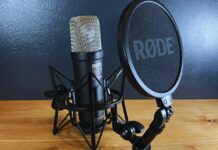
Shure MV7+: A Travel Podcast Mic That Fits in a Bag
The Shure MV7+ is a hybrid USB-C and XLR dynamic microphone priced around $299.99. It has built-in DSP features including Auto Level Mode and a denoiser. Packing it for travel requires a small desktop stand and a laptop, so “portable” is relative here.
Dynamic mics like the MV7+ reject room noise better than condenser mics, which makes them a smart pick for hotel rooms and untreated spaces where echo is a problem.
Zoom H1n and TASCAM DR-10L Pro: The Backup Plan
The Zoom H1n costs $99.99 and is a pocket recorder for capturing standalone audio. The TASCAM DR-10L Pro lists at $199 on B&H and records 32-bit float audio through a clip-on lav mic attached directly to the recorder.
My contrarian take on backup recording: I disagree with the advice that wireless mics with internal recording make standalone recorders unnecessary. The TASCAM DR-10L Pro at $199 records independently of any wireless system.
If your receiver dies, your phone crashes, or your camera corrupts a file, that TASCAM still has your audio on its own SD card. A backup that depends on the same system it’s backing up isn’t a real backup.
Questions People Ask About Portable Microphones
Q: Are wireless microphones better than wired for content creation?
Wireless mics offer freedom of movement, but wired options like the BOYA BY-M1 at $24.99 eliminate every possible wireless failure point. The right choice depends on whether your shoots involve movement or stationary recording.
Q: Do I need a separate mic for my phone and camera?
A dual-output mic like the RØDE VideoMic GO II at $99 works on both 3.5mm and USB connections. That said, audio quality on a direct USB-C phone mic like the Shure MV88 at $159 tends to be cleaner because there’s no conversion happening.
Q: Is 32-bit float recording worth paying extra for?
It prevents audio clipping, which matters when you can’t control your recording environment. The DJI Mic 2 at $269 and TASCAM DR-10L Pro at $199 both offer it. For studio recording at a desk, it’s less of a priority.
Q: Can I use a portable microphone for podcasting?
The Shure MV7+ at $299.99 handles podcast-quality voice recording and fits in a travel bag with a small stand. It’s heavier than a clip-on, but dynamic mics reject room noise much better for voice work.
Q: What’s the cheapest portable mic worth buying?
The BOYA BY-M1 at $24.99 is a wired lav that plugs into phones and cameras. Audio quality is surprisingly solid for the price, and zero wireless pairing means zero wireless problems.
Conclusion
Portable microphones in 2026 come down to one honest question: what do you shoot and where? A wireless clip-on, a phone mic, and a backup recorder cover nearly every creator scenario without overlap.
Skip the spec obsession and match the mic to your daily filming routine. The best audio setup is the one that’s always ready when the moment hits.