If you make home videos, a shotgun microphone can be one of the fastest ways to make your audio sound more “finished.”
A shotgun mic is built to favor on-axis sound and reduce off-axis sound (sides), which can help voices stand out in typical rooms.
The real question is not “Are shotgun mics good?” It’s whether a shotgun mic fits your shooting distance, room acoustics, and workflow.
What a Shotgun Mic Actually Does
Shotgun mics use an interference tube design to help reject off-axis sound, which is why they can feel more “focused” than many other mic types.
Longer tubes generally reject more off-axis sound, but they can also be harder to handle and place.
If your mic is far from your mouth, the recording still collects more room sound and reflections, even with a shotgun pattern.
A practical rule is to keep the mic a few feet from the subject when possible, instead of relying on distance.
Types of Shotgun Microphones for Home Creators
When people search types of shotgun microphones, they usually run into these practical categories.
On-camera mini shotguns (3.5mm)
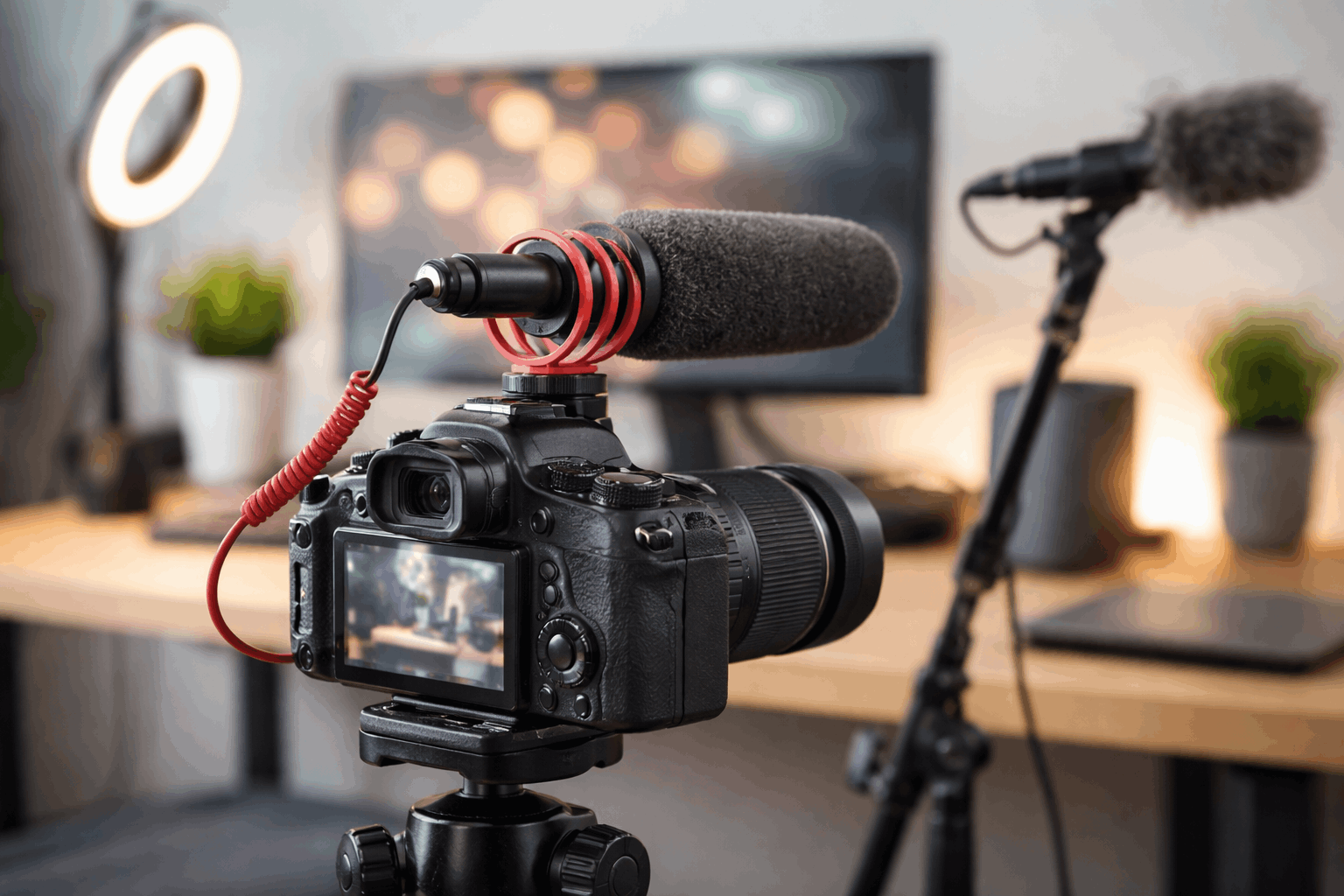
These are compact and designed to sit on a camera or small rig.
They are popular for run-and-gun, simple desk setups, and travel because they are fast to deploy.
Short XLR shotguns (boom-friendly)
These are common for indoor dialogue and controlled home shoots.
They typically need phantom power from an interface, recorder, or mixer, but they’re easier to position just out of frame.
Longer XLR shotguns (reach + control outdoors)
Longer shotguns can help more in open spaces, but placement becomes more demanding.
Indoors, longer interference tubes can also make off-axis sound behave in a less natural way in reflective rooms, so matching the mic to the room matters.
When a Shotgun Mic Is Worth It at Home
A shotgun microphone tends to pay off when your setup matches how it’s meant to be used.
Talking-head videos (camera on tripod)
If you can place a shotgun just out of frame, you can get clean, present voice capture without seeing a mic.
Keeping it close is the real win, not chasing the most expensive model.
Overhead desk recording (tutorials and product demos)
For desk creators who don’t want a big broadcast mic in frame, a short shotgun on a small boom arm can be a good compromise.
The mic stays close, and you keep your workspace clean.
Two-person interviews in a controlled space
A shotgun can work if you control distance and angle, but it gets harder when two people sit far apart.
In many cases, two lavaliers or two dynamic mics will be easier, but a shotgun can still be useful if you keep it close and centered.
When It’s Not Worth It
A shotgun mic is not a magic fix for the most common home-audio issues.
You can’t get the mic close
If the mic must stay on top of the camera across the room, your audio will often sound “roomy.”
The mic may still be better than a built-in camera mic, but the improvement may not feel worth the money.
Your room is echo-heavy
Hard walls, tile floors, and bare ceilings create reflections that a shotgun cannot erase.
In those cases, basic room treatment (rug, curtains, soft furniture) can improve audio more than upgrading the mic.
You record in windy or unpredictable outdoor conditions
Wind protection becomes mandatory, and the mic choice matters less than the quality of your windshield and mounting.
This is where shotgun mic accessories often decide the final result.
Price Snapshot: Popular Options (USD)
Prices change often, so treat this as a snapshot from major retail listings, not a permanent rule.
| Category | Model | Typical Use | Price (USD) |
|---|---|---|---|
| Budget on-camera | Deity V-Mic D4 Mini | Basic camera/phone rigs | $49.95 B&H Photo Video |
| Budget on-camera | RØDE VideoMicro II | Run-and-gun, compact kits | $79.00 B&H Photo Video |
| Mid on-camera | Sennheiser MKE 400 (2nd Gen) | Camera/phone, more control | $149.00 B&H Photo Video |
| Mid on-camera/USB hybrid | RØDE VideoMic NTG | Camera + USB workflows | $209.95 B&H Photo Video |
| Budget XLR shotgun | Audio-Technica AT875R | Indie/home dialogue on boom | $189.00 B&H Photo Video |
| Mid XLR shotgun | Sennheiser MKE 600 | Home dialogue, flexible power | $299.00 B&H Photo Video |
| Pro XLR shotgun | RØDE NTG5 | Higher-end location sound | $489.20 B&H Photo Video |
| Pro standard | Sennheiser MKH 416 | Film/TV staple category | $734.30 B&H Photo Video |
If you are hunting budget shotgun microphones, the key is to avoid overspending before you can place the mic correctly.
A modest mic placed close can beat an expensive mic placed far away.
Shotgun Mic Accessories That Matter (and What They Cost)
Most home creators underestimate accessories, then wonder why their shotgun mic sounds inconsistent.
These add-ons often make the difference between “okay” and “reliable.”
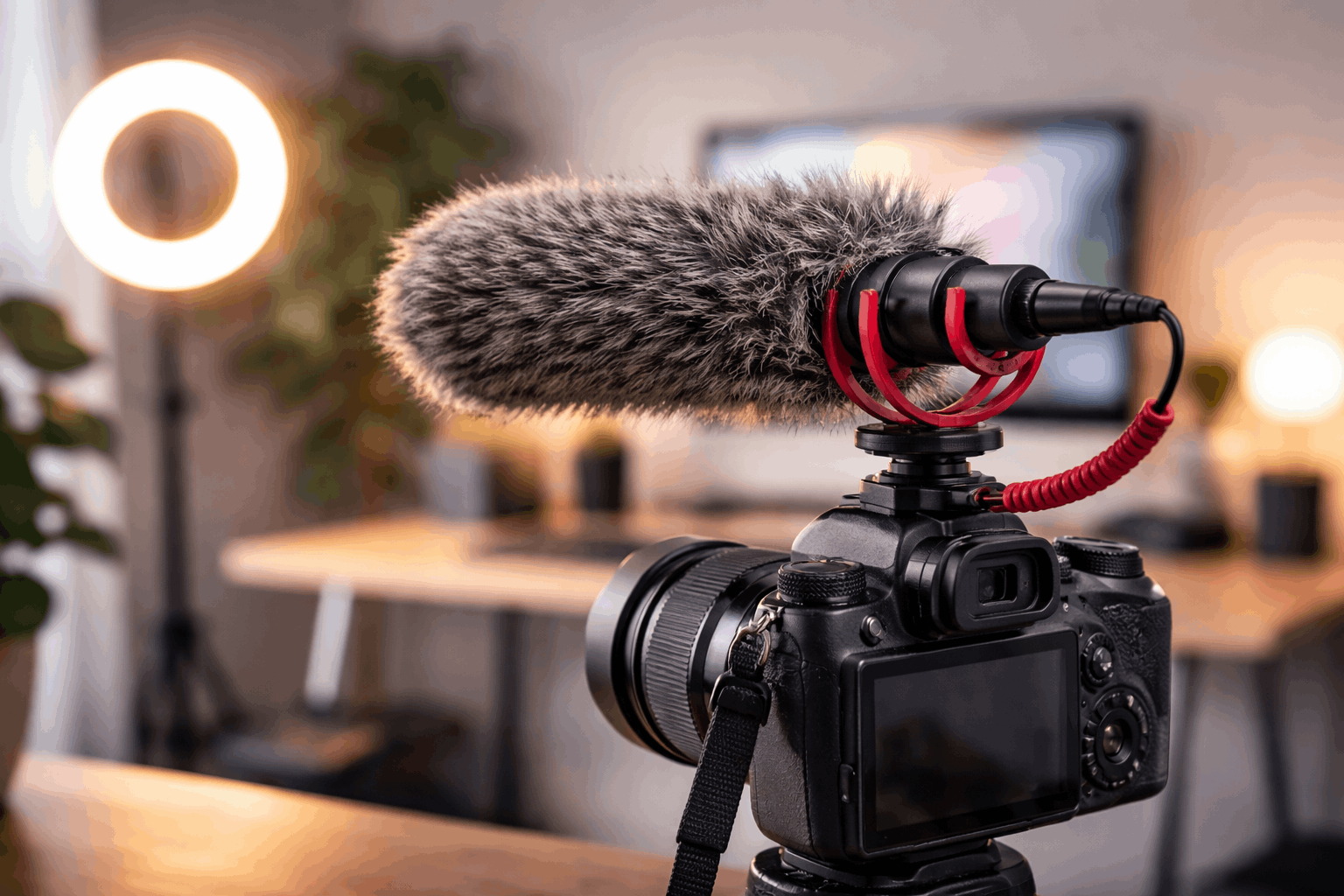
- A furry windshield is one of the most cost-effective upgrades for outdoor or fan-noise situations. For example, the RØDE DeadCat VMP+ (for specific RØDE models) is listed at $39.00 at B&H.
- A shock mount reduces bumps, cable tug noise, and small handling vibrations. The Rycote InVision Universal shock mount is listed at $87.95, which shows how mounting can cost real money even before you upgrade the mic itself.
- A basic boompole is what makes “close placement” possible without cluttering your frame. The RØDE Micro Boompole is listed at $59.00, which is a common entry point for home dialogue setups.
- A simple extension cable can solve real workflow problems when your camera is far from your mic position. The RØDE VC1 10′ 3.5mm extension cable is listed at $18.00.
Best Shotgun Microphones: How to Choose for Your Setup
If you are comparing best shotgun microphones, use the setup-first approach instead of brand-first.
If you need speed and simplicity, an on-camera mic can be “good enough” for casual home shooting, especially when your camera is close.
If you want the biggest jump in dialogue quality, focus on getting the mic close with a boom or arm, because that’s where a shotgun earns its reputation.
If your workflow includes a computer, a hybrid mic can simplify recording for certain creators by reducing extra gear.
Are They Worth It?
Shotgun microphones are worth it for home video when you can place them close, keep them stable, and control basic room sound.
They are less worth it when the mic must stay far away on-camera, because distance pulls room tone into the recording no matter what pattern you buy.
If you build the setup around placement, even many budget shotgun microphones can produce voice audio that feels clearly upgraded.