Good lighting is the fastest way to make home videos look more “finished,” even if you are recording on a phone or a basic webcam.
Two of the most common options for everyday creators are the ring light and the softbox.
Both can improve exposure, reduce grain, and make colors look cleaner, but they do it in different ways.
What a Ring Light Does Well
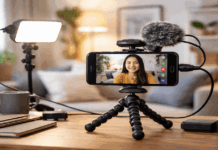
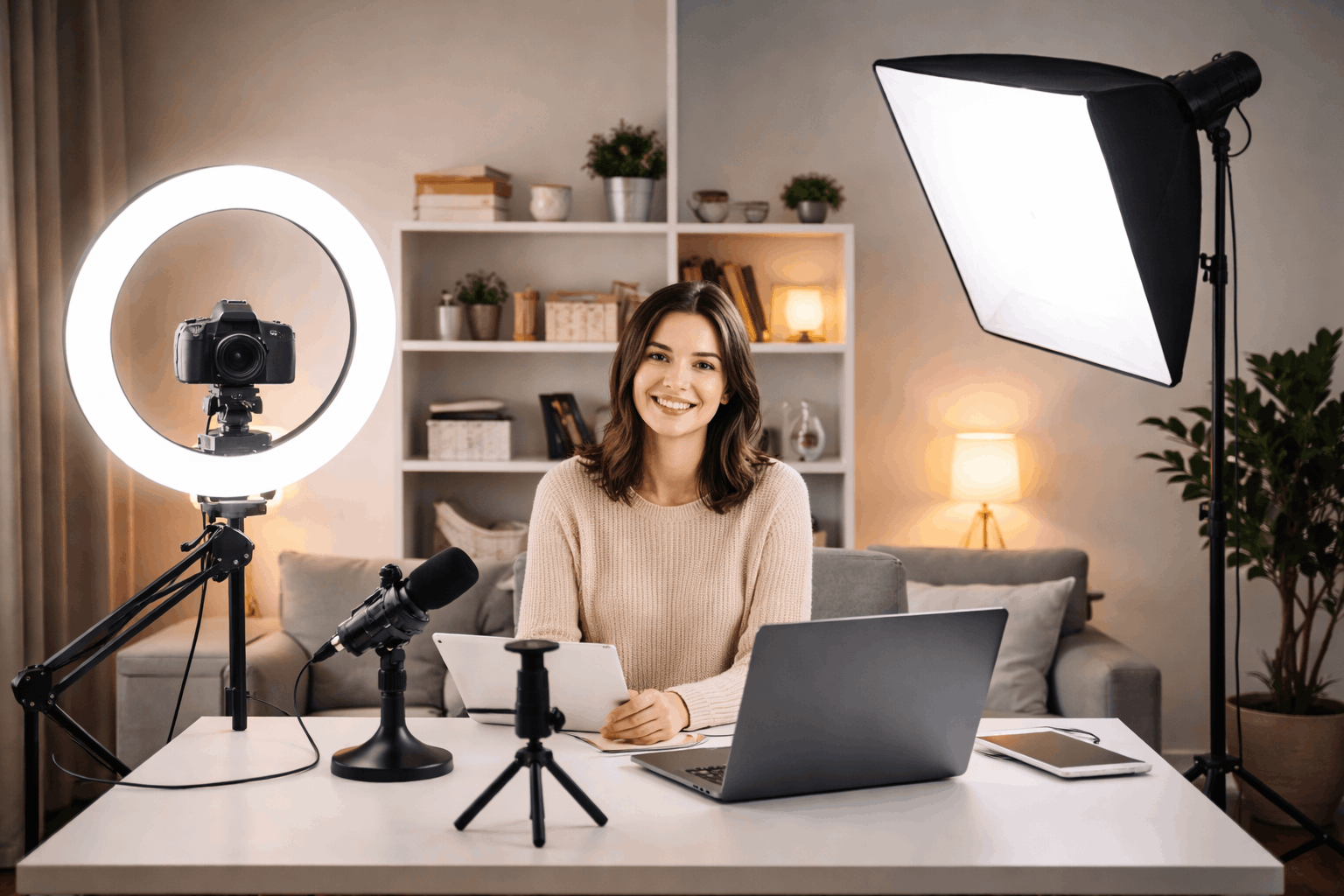
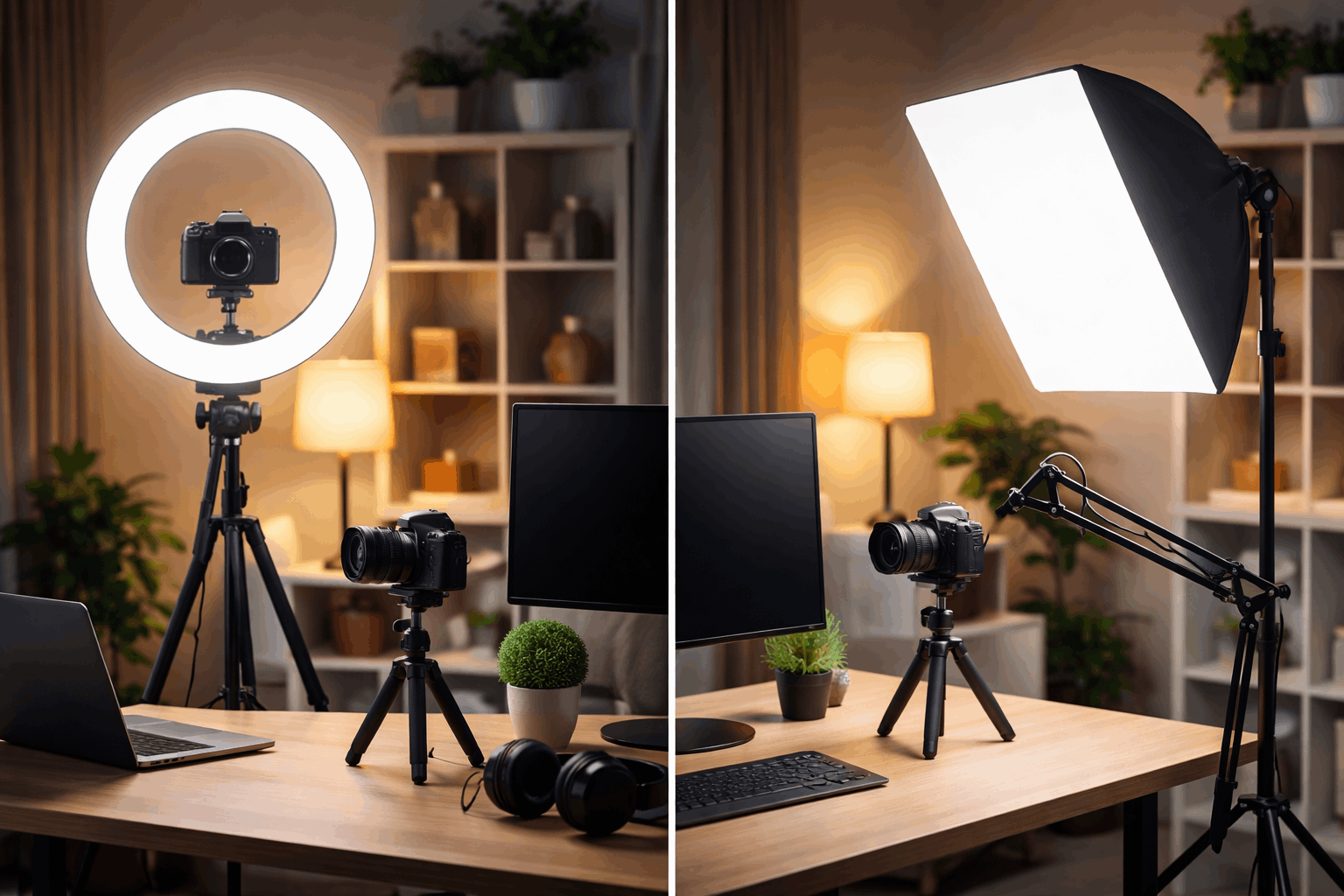
A ring light is a circular LED fixture, usually mounted on a stand or attached to a desk arm, with the camera placed through the center or just behind it.
The light comes from many small LEDs arranged in a ring, which creates a very direct, front-facing illumination.
Strengths of a ring light
- Fast setup for one person on camera. It is designed for solo creators filming head-and-shoulders content like talking videos, tutorials, livestreams, and social clips.
- Even face lighting from straight ahead. Because it is centered near the camera, it reduces harsh shadows under the eyes and nose for many people.
- Compact footprint. A ring light takes less space than large modifiers, making it easier in bedrooms, small offices, and tight corners.
- Easy brightness and color control. Many models offer dimming and adjustable color temperature, so you can match daylight or warmer indoor tones.
- The “catchlight” look. The circular reflection in the eyes is a recognizable style that some creators prefer, especially for beauty or influencer-style content.
Limitations of a ring light
- Flatter, less dimensional lighting. Front lighting can look a bit “2D” because it reduces natural shadow shaping that adds depth.
- Potential for glare. Glasses, shiny skin, and glossy products can reflect the ring strongly.
- Less power for wider shots. For full-body or room scenes, a small or mid-size ring light may not be bright enough without pushing your camera’s ISO.
A ring light is a strong choice when the priority is speed, simplicity, and consistent face lighting in a small space.
What a Softbox Does Well
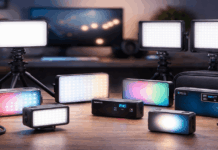
A softbox is a light modifier that attaches to an LED or studio-style light to spread and diffuse it through a larger fabric surface.
The diffusion turns a hard point-source into a bigger, softer source—closer to how a large window looks.
Strengths of a softbox
- More natural, “cinematic” softness. The light wraps around the face and reduces harsh edges in shadows, often producing a more professional look.
- Better control of direction. A softbox works best placed slightly off to one side and above eye level, which creates gentle shadows and depth.
- Less distracting reflections. The catchlight is usually a soft rectangle, and glare on glasses is often easier to manage by adjusting angles.
- Scales better for wider framing. A larger light source can cover more of the scene, which helps for standing shots, two people, or product demos at a table.
Limitations of a softbox
- Takes more space. A softbox and stand can feel big in small rooms, especially if you need distance from the subject.
- Slightly slower setup. Many pop open quickly, but it still involves positioning a larger piece of gear.
- More pieces to manage. The stand, the light, the modifier, and sometimes a power supply make it less “grab-and-go.”
A softbox is ideal when the goal is a cleaner, more natural image with better depth and fewer harsh reflections.
The Biggest Difference: Light Quality and Angle
A ring light is typically front-on and relatively small as a source, which creates a direct, even look.
A softbox is typically off-axis and larger as a source, which creates softer shaping and a more dimensional result.
For home videos, the angle matters as much as the gear.
A ring light placed slightly to the side can look better than one placed perfectly head-on, and a softbox placed too close and too low can look strange.
Which is Better For Your Setup?
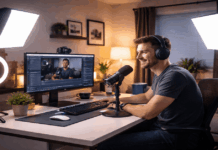
Ring lights pair well with a simple creator setup.
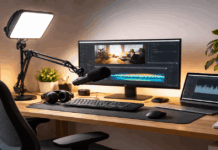
Softboxes also work nicely in “audio-first” creator setups.
Choose a ring light if you mostly make:
- Talking-head videos at a desk
- Webcam meetings, livestreams, or short-form social content
- Beauty tutorials where the centered, bright look is preferred
- Content in a very small room where large stands are a hassle
Choose a softbox if you mostly make:
- YouTube-style videos where you want a natural, polished look
- Product demos where reflections need control
- Two-person interviews or wider framing
- Standing shots, cooking videos, or craft videos with a bigger scene
The “One Light” Setups That Work Most of The Time
If you are only buying one light, these setups are reliable.
One ring light setup (simple and effective)
Place the ring light just above eye level, angled slightly down and keep it about arm’s length away for a softer look.
Turn brightness down enough to avoid shiny hotspots, and adjust camera exposure.
If you wear glasses, raise the light a little higher and tilt it downward more.
One softbox setup (more natural look)
Place the softbox 30–45 degrees to one side of the camera. Raise it so it sits slightly above eye level, angled down toward the face.
Start with the light a bit farther back than you think; distance helps spread coverage.
Use your room’s ambient lights carefully—mixed color temperatures can make skin tones look odd.
What About Shadows and Backgrounds?
Lighting is not only about the face. It also affects how your background looks on camera.
Ring lights often brighten the face while leaving the background darker, which can look fine for short-form or calls, but sometimes feels “flat.”
Softboxes often make the scene feel more cohesive, especially if you add a small secondary light (even a lamp) to prevent the background from going too dark.
A simple upgrade either way is adding a small background light aimed at a wall or bookshelf. It creates separation.
How Lighting Choices Affect Webcams and Cameras
With better light, your camera can lower ISO, which reduces grain and improves detail.
A ring light can look great on webcams because it delivers direct brightness, but it may also highlight skin texture and create stronger reflections.
A softbox can look smoother and more forgiving, but you need enough brightness to avoid underexposure, especially with older webcams.
If your image looks noisy, the fix is usually not a new camera—it is more controlled light.
Conclusion
Many home setups end up using both styles over time.
A ring light is often the easiest first step because it improves your camera image immediately with minimal setup.
A softbox becomes the stronger long-term choice when you want a more natural look, better control of reflections, and cleaner results in wider scenes.