If you record at home—YouTube videos, Zoom lessons, podcasts, voiceovers, or simple livestreams—your microphone is only part of the story.
The biggest “sound upgrades” usually come from controlling air blasts, vibration, room reflections, and gain staging.
Below are different microphone accessories that make a measurable difference for everyday creators, plus real-world price examples you can check today.
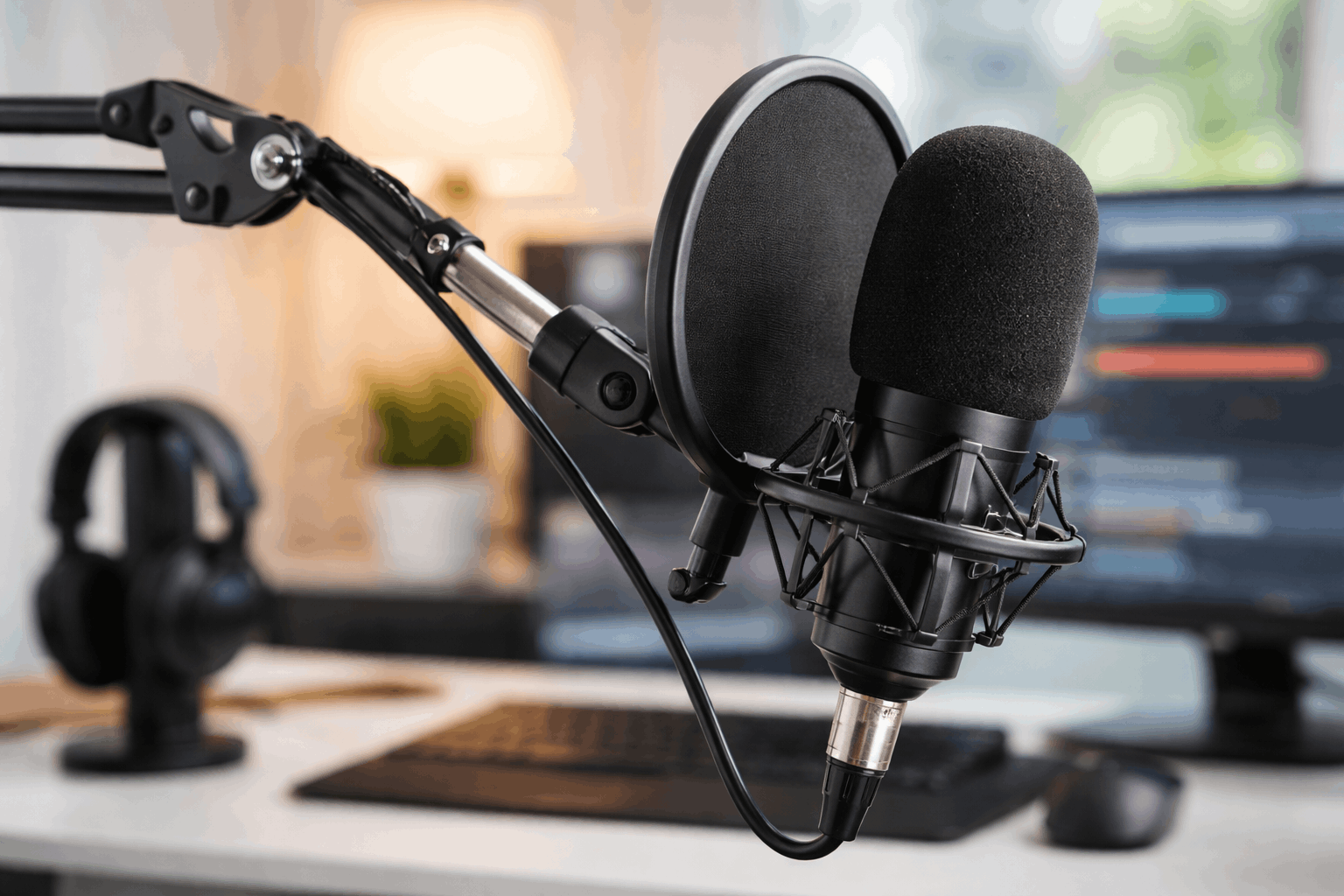
1) Pop filter: fixes plosives at the source
Plosives (“P,” “B,” “T” bursts) overload a mic capsule with fast air pressure, creating that ugly low-end “thump.”
A pop filter sits a few inches in front of the mic and breaks up that air blast before it hits the microphone element.
Pop filter help reduce excessive pressure from “breath blasts and vocal plosives,” and in many cases can be used interchangeably depending on the situation.
When it helps most
Talking close to a mic (voiceover, podcast, talking-head videos)
Bright condenser mics that reveal every mouth noise
Any setup where you can’t stay perfectly off-axis
Price examples
Stedman Proscreen PS101 pop filter: $49.95 (B&H listing).
Many basic nylon pop filters are cheaper, but quality and clamp stability vary.
Quick setup tip
Place it 2–4 inches from the mic grille, then keep your mouth another 3–6 inches back.
This spacing reduces blasts without making the voice sound boxed-in.
2) Windscreen: reduces breath noise and mild wind
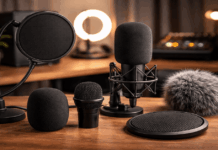
A foam windscreen is a simple sleeve that helps calm breath turbulence and light drafts.
Open-cell foam windscreens is a common way to reduce wind noise and popping and tools to reduce pressure from wind current and breath blasts.
For serious outdoor wind, you’ll usually need heavier wind protection than basic foam, but foam is still one of the cheapest “wins” indoors.
When it helps most
Close speech on dynamic mics (especially if you move around)
Fans/AC in the room, or you record near a laptop
Outdoor or run-and-gun audio (even mild wind can ruin takes)
Price example
Shure A58WS windscreen: $18.00 (Sweetwater listing).
3) Shock mount: cuts desk bumps and vibration
If your mic hears every keyboard tap, desk bump, or mic-stand knock, a shock mount can help.
Shock mounting is about preventing handling noise by canceling/isolating vibrations before they reach the capsule.
Shock mounts are usually size-specific. Measure your mic body diameter or use the manufacturer’s compatibility list.
When it helps most
Desk-mounted boom arms (especially on lighter desks)
Creators who gesture a lot or type while speaking
Condenser mics, which often pick up more low-level mechanical noise
Price example
RØDE PSM1 shock mount: $49.00 (Sweetwater listing/category page).
4) Boom arm or stable stand: consistent distance = cleaner sound
“Better sound” often means consistent mic placement.
A solid boom arm keeps your mic at the same distance and angle, so levels and tone don’t wander across a take.
Pair a boom arm with a shock mount if you’re mounting to a desk that transmits vibration easily.
When it helps most
Talking-head content where you want the mic close but off-camera
Podcasts with lots of head movement
Small desks where a floor stand is awkward
Price example
RØDE PSA1+ boom arm: $129.00 (Sweetwater listing).
5) Inline preamp/“gain booster”: a game-changer for low-output dynamics
Many creators love broadcast-style dynamic mics, but some of them output a low signal and need a lot of clean gain.
If your interface preamp is pushed near its limit, you can get more hiss or noise.
This is where dynamic microphone accessories like inline mic activators can help.
They provide extra clean gain (typically using phantom power) before the interface preamp has to work so hard.
Price examples
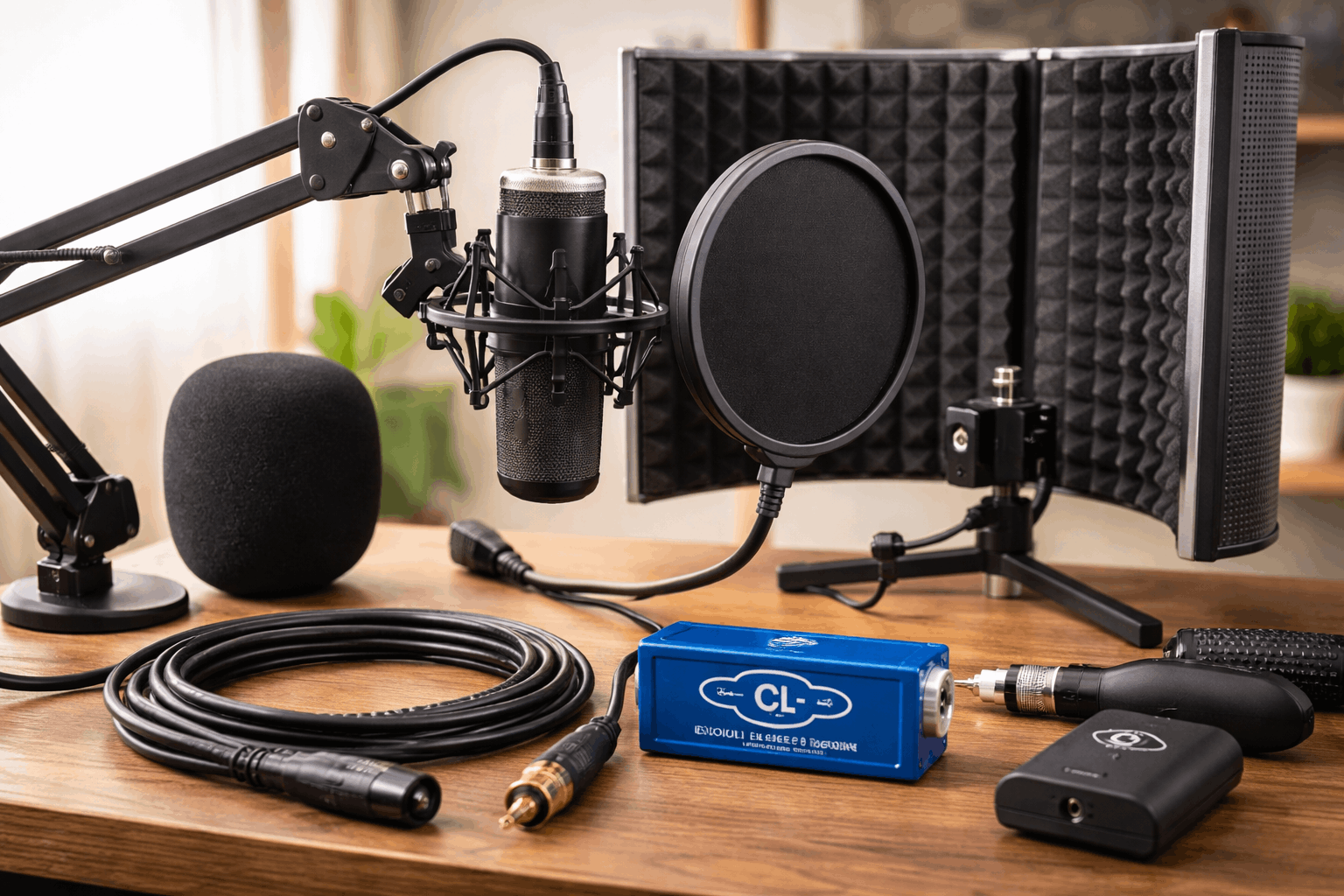
Cloud Microphones Cloudlifter CL-1: $129.00 (Sweetwater listing).
Triton Audio FetHead inline preamp: $74.95 (Sweetwater listing).
When it’s worth it
You record speech with a low-output dynamic mic and your interface gain is always near maximum
Your recordings sound quiet unless you boost heavily in post
6) Cables that don’t fight you: reliability matters more than “magic”
A cable won’t “upgrade” your tone, but bad cables absolutely downgrade everything with crackles, intermittent noise, or hum.
For home setups, the real goal is simple. Reliable connections and proper length.
Buy the length you need (plus a little slack) and avoid tight bends at connectors.
Price examples (10 ft XLR)
Hosa XLR-110 (10′): $13.29 (Sweetwater listing).
Mogami Gold Studio-10 (10′): $79.95 (Sweetwater listing/category page).
7) Room control that actually works: reflection filters and acoustic kits
If your recordings sound “roomy,” “hollow,” or echoey, that’s usually reflections—not the mic.
Creators must treat early reflections (often found using “mirror points”) to keep reflections under control.
For creators who can’t permanently treat a room, a reflection filter behind the mic can help reduce some room ambience.
Reflection filters are designed to reduce unwanted ambience and reflections, including models aimed at budget setups.
Price examples
sE Electronics RF-X Reflexion Filter X: $93.71 (B&H).
sE Electronics SPACE Reflection Filter: $229.00 (B&H).
Acoustic room kits (B&H examples):
Primacoustic London 8 kit: $449.99 (B&H list page).
Auralex Roominator kit: $191.99 (B&H list page).
What to buy first: a simple priority list
If you want the most improvement per dollar, this order is hard to beat for most home creators:
- Windscreen or pop filter (whichever fits your mic style)
- Boom arm/stand (stable, consistent distance)
- Shock mount (if desk/stand vibration is a problem)
- Room control (reflection filter or basic treatment)
- Inline preamp (only if you truly need cleaner gain for dynamics)
A note on custom microphone accessories
Creators often look for custom microphone accessories—custom-length cables, color-matched windscreens, branded shock mounts.
These can be great for workflow and aesthetics, but the “sound-improving” rule stays the same.
Prioritize accessories that reduce plosives, reduce vibration, control reflections, or improve gain staging.
Cosmetic customization is best after you’ve solved those fundamentals.
Final takeaway
The fastest path to better audio is removing problems before they reach the mic.
The right combination of these best microphone accessories can make a budget mic sound professional in a simple home setup.
Prices vary, so use the examples above as a current reference and re-check your preferred retailer before buying.