Good lighting solutions are the fastest way to make a home video look cleaner, sharper, and more professional, even if you’re using a basic webcam.
In a small space, the goal is simple: create flattering light without bulky stands, harsh shadows, or a setup that takes over your room.
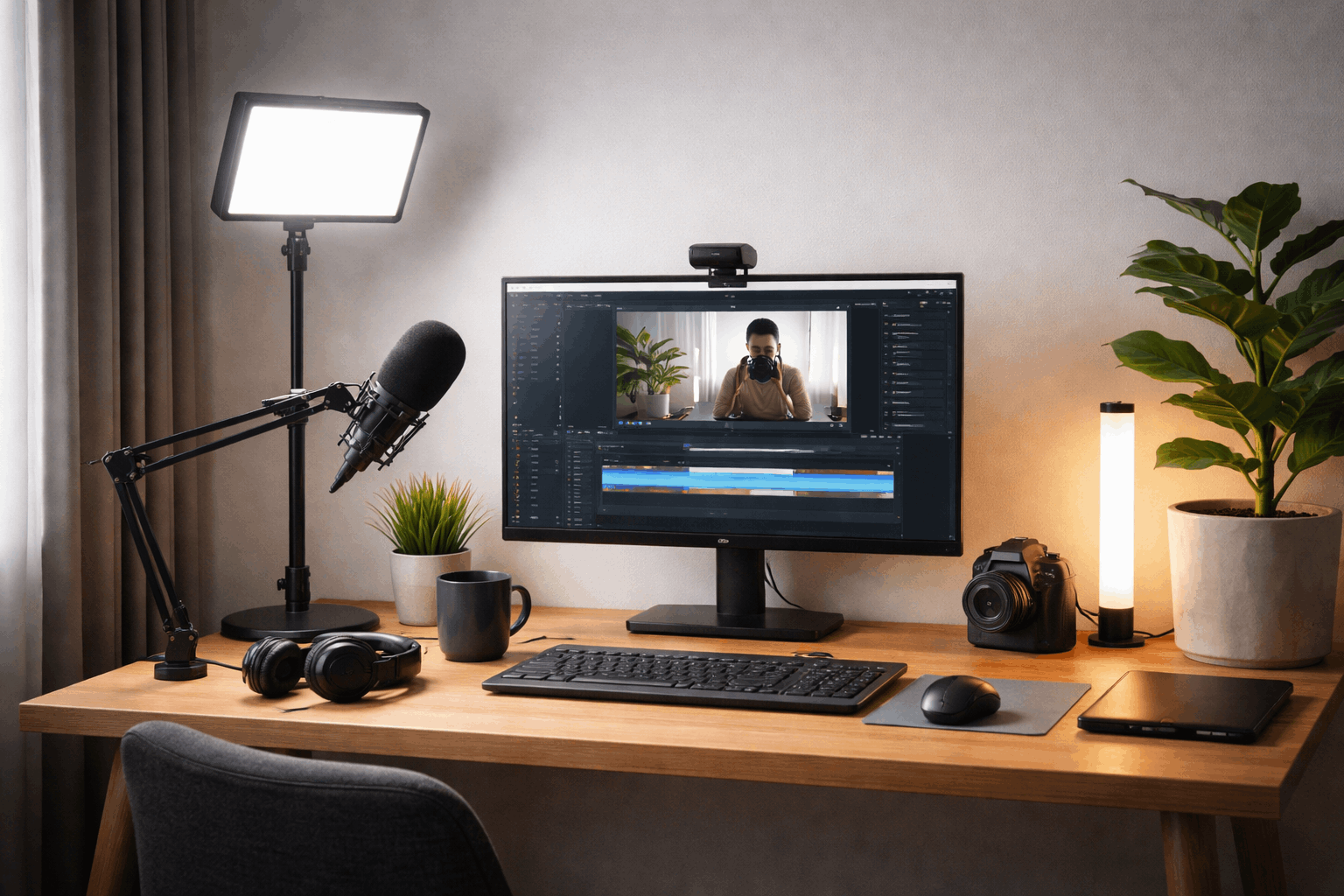
Focus on practical lighting choices that pair well with everyday creator gear like microphones, webcams, tripods, and simple desk setups.
Why Lighting Matters More Than Your Camera in Small Rooms
Most home setups fail for one reason: the camera can’t “see” well in dim or uneven light.
Low light creates grainy video, soft focus, and muddy colors—especially on webcams.
A small, consistent light source placed correctly often improves image quality more than upgrading to a better camera.
Lighting also helps your audio workflow. When video looks good, you’re less tempted to “fix it in editing.”.
The Small-Space Lighting Basics (you only need a few concepts)
Before buying anything, understand these three basics:
- Soft vs. hard light: Soft light (diffused) smooths skin and reduces sharp shadows. Hard light creates strong shadows and can look harsh in small rooms.
- Light placement: A light slightly above eye level and angled down is usually flattering. Side lighting adds depth but can create shadows if it’s too strong.
- Color temperature: Light can be warm (yellow) or cool (blue). Mixed lighting (window light + warm lamp + cool LED) can make skin tones look strange. Matching your light color keeps your video consistent.
If you remember one rule. One good key light placed well beats multiple weak lights scattered around.
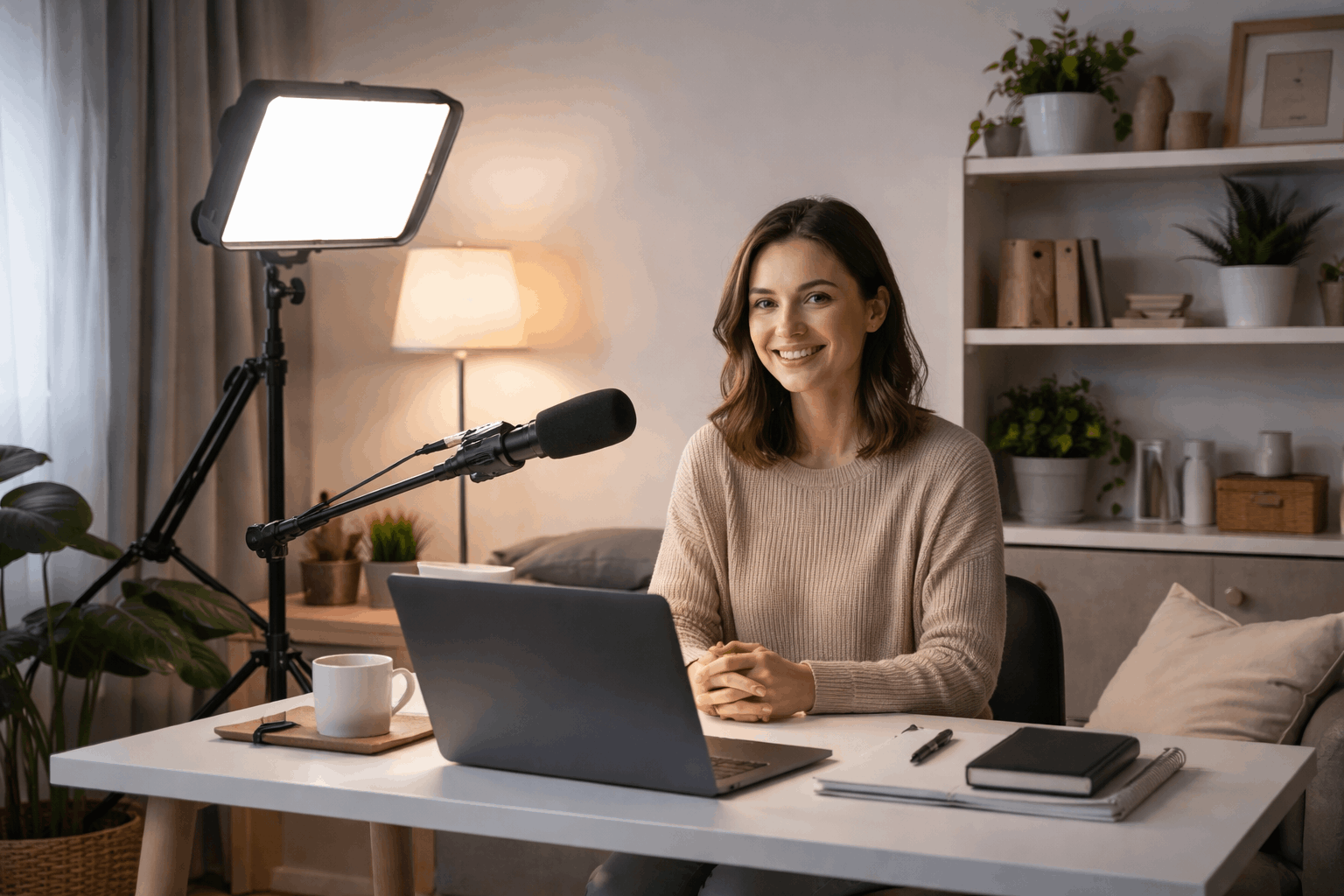
Best Lighting Types For Small Spaces
| Lighting type | Why it works in small spaces | Best for | Key tips / watch-outs |
|---|---|---|---|
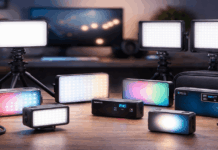
| LED Panel Light | Compact, mountable on desk stands/clamps, adjustable brightness and often color temperature | Talking-head videos, tutorials, streaming, product shots | Add diffusion for softer light; place slightly above eye level; avoid fan-noise models if your mic is sensitive |
| Ring Light | Front-facing, flattering light with minimal positioning effort | Direct-to-camera content, webcams, beauty/crafts | Raise and tilt down to reduce harshness; move off-center to reduce glasses glare; can look “flat” if too centered |
| Tube Light | Slim footprint, easy to place on shelves or behind monitors | Background accents, side lighting, creative setups | Use as a subtle backlight for separation; keep brightness low to avoid distracting color spill |
| Clamp Light + Diffusion | Very budget-friendly and easy to attach to furniture | Beginners, basic home setups | Never aim a bare bulb at your face; use a daylight-balanced bulb + diffuser or bounce off a wall for softer light |
Must-Have Features When Shopping For Small-Space Lights
When space is limited, these specs matter more than “big studio” features:
- Dimming control: Essential. You want the ability to lower brightness to match your camera and room.
- Adjustable color temperature: Helps you match window light or room light.
- Flicker-free performance: Important for video. Flicker can appear as banding or pulsing.
- Quiet operation: Some lights have fans. If your microphone is sensitive (especially condenser mics), fan noise can show up in recordings.
- Mounting options: Look for tripod threads, cold shoe mounts, or clamp compatibility.
Simple Lighting Setups That Stay Compact
A reliable small-space setup starts with one key light placed correctly. The most common mistake is putting the light too high or too far to the side.
A good baseline is to place your key light slightly above eye level and aim it down toward your face.
That angle keeps shadows natural and reduces the “overhead bulb” look.
Webcam
If your content is mostly webcam-based, a ring light or small LED panel centered near the camera is usually the simplest solution.
It keeps your face evenly lit and makes your video look stable across different times of day.
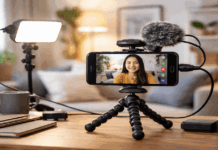
If you are using a phone or mirrorless camera on a tripod, a panel off to one side can create a more dimensional look.
When you want a cleaner background without adding big equipment
A small tube light or low-power lamp aimed at the wall behind you can help separate you from the background.
The key is subtlety. In small rooms, background lighting should support the shot, not distract from it.
Lighting Solutions Into a Basic Creator Gear Stack
Lighting should work with, not fight, your audio and camera placement.
If you use a desk microphone, keep the light positioned so the mic does not cast a visible shadow across your face.
If you use a boom arm, make sure your light stand or clamp mount does not interfere with the mic’s range of motion.
For webcams, placing the light close to the lens improves image clarity, but you should avoid pointing it so directly that it creates glare.
Tripods also matter here
Many creators film in small spaces with limited floor area.
So, a compact tripod or desktop stand for the light can be more practical than a tall stand that blocks movement.
If your camera and light share similar mounting standards, you can maintain a consistent, repeatable setup, which helps.
Common Small-Room Problems and Quick Lighting Solutions
If your face looks washed out, the fix is usually to lower brightness, add diffusion, or move the light slightly to one side.
If you see harsh shadows under the eyes, raise the light slightly and angle it down, and consider turning off overhead room lights.
If your skin tone looks odd, you are likely mixing different color temperatures, so either match your key light to the room.
Reflections in glasses are common and not a deal-breaker. Raising the light above eye level, tilting it down, and moving it off-center usually solves it.
Practical Buying Guide for Everyday Creators
If you want one dependable option: choose a small dimmable LED panel with adjustable color temperature and a simple stand or clamp mount.
If your content is mainly face-on and you want the easiest setup: a ring light is hard to beat.
If your space is extremely tight or you want flexible placement: add a tube light for background and side angles.
Conclusion
In a small space, the best lighting solutions are the ones you can set up quickly and use consistently.
Start with a single key light that is dimmable, flicker-free, and easy to mount near your desk.
Then expand only if you truly need more depth or background separation.