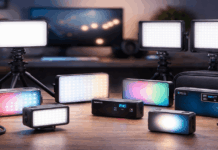
LED panel lights are flat, bright light sources that help you look clear and professional on camera without complicated gear.
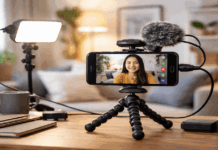
If you record videos at home with a simple mic, webcam, and tripod, lighting is usually the fastest upgrade you can make.
You will also learn how to place and adjust them so your face looks natural and your background stays under control.
What are LED panel lights and why creators use them
LED panels are thin fixtures filled with many small LEDs that spread light evenly across a wide surface.
They are popular for home recording because they are bright, quiet, and easy to mount on a stand beside your camera.
A panel can light your face without the harsh hotspot you often get from an exposed bulb pointed directly at you.
When you understand the basics, you can build a repeatable setup that makes your video look cleaner in any room.
LED panels compared with ring lights and bulbs
A panel produces a broader beam that can be softened further with diffusion, which helps skin tones look smoother on camera.
A ring light can be convenient for close shots, but it often creates a circular catchlight and can feel flat if used alone.
A bare bulb can be cheap, but it is harder to control glare and shadows unless you add modifiers and distance.
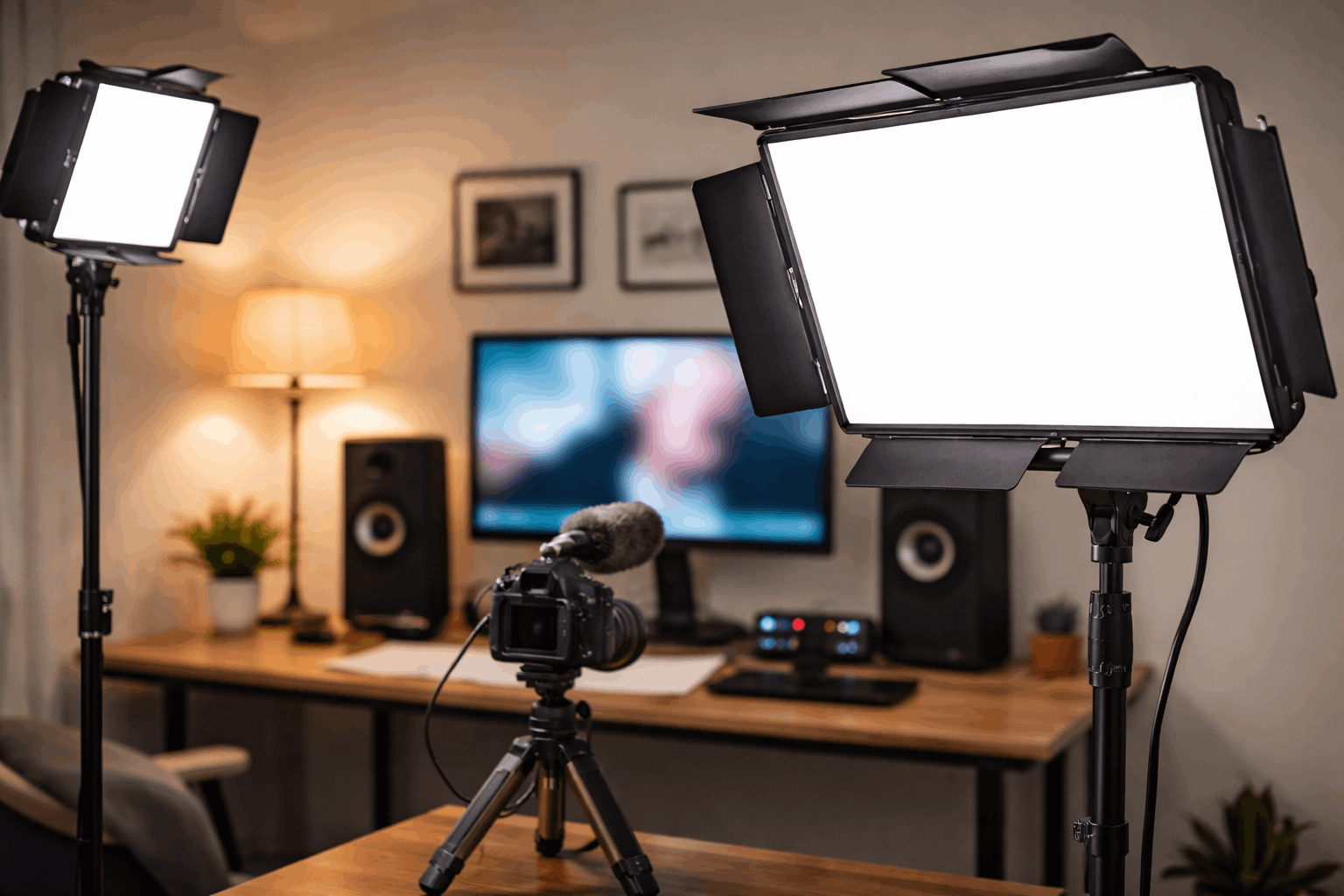
LED panel light benefits in real home setups
The main benefits are control and consistency, because you can set the same brightness and color every time you record.
Panels also stay relatively cool, which matters when you are filming longer takes in a small room.
Many models include mounts and simple controls, so you can get usable light without learning studio lighting first.
Key features you should understand before buying
The most important specs are brightness, color temperature, and how smoothly the light dims when you adjust it.
You also want a size that fits your space, because a small panel is easy to place while a larger panel can look softer.
Power options matter for daily use, because batteries help portability while wall power helps long sessions.
If a panel is hard to control, you will waste time fixing light problems instead of recording.
How “adjustable” usually works on LED panels
A LED panel light adjustable model typically lets you change brightness and shift color temperature from warm to cool.
Bi-color panels mix warm and cool LEDs, letting you match window light during the day or warmer lamps at night.
Look for controls that change settings in small steps, because smooth adjustment makes it easier to keep your skin tone consistent.
Understanding brightness and distance
Brightness ratings are helpful, but your real result depends on how close the light is to your face and how much diffusion you use.
If the panel is far away, you need more output, and the room may look darker behind you as the light falls off.
If the panel is closer and softened, you can often use lower brightness while still getting a flattering look.
Power, mounts, and practical handling
Some panels run on USB, some use a wall adapter, and others take camera batteries, so choose what matches your workflow.
A sturdy mount helps, because a wobbly light stand can ruin framing and create small brightness changes as the light shifts.
Check for a standard thread or cold shoe option so the panel can attach cleanly near a webcam or on a compact stand.
Common forms: boards, boxes, and modifiers
Panels come in different shapes and build styles, and the form affects how the light spreads and how it mounts.
Some are ultra-thin and rigid, while others are designed to work with diffusion frames and soft modifiers.
The right style depends on your room, your shot type, and whether you want a harder or softer look.
Understanding the common categories helps you avoid buying a light that fights your setup.
What people mean by a “panel board”
A LED panel light board usually means a flat, rigid panel with a grid of LEDs and a built-in diffuser layer.
This style is easy to mount, easy to aim, and common in small creator kits because it stays compact.
If you need portable lighting for a desk setup, a board-style panel often gives the simplest path to consistent results.
What people mean by a “panel light box”
A LED panel light box typically describes a panel used with a softbox-style diffuser or an integrated soft front surface.
This design spreads light more, which can look smoother on skin and reduce sharp shadows under the nose and chin.
If you film close to a wall or in a tight space, a box-style approach can help reduce harshness without moving the light far away.
Useful add-ons that improve control
Diffusion softens the light, while grids help prevent spill onto the background and keep the beam aimed where you want it.
A small bounce card can act as fill, and it often costs less than buying a second light immediately.
When you add simple modifiers, you gain more control without turning your room into a full studio.
Choosing the best LED panel lights for your setup
Your best choice depends on your filming distance, how much room you have, and whether you need travel-friendly power.
For beginners, the goal is reliability, easy controls, and a look that stays consistent across day and night recording.
Search results for best LED panel lights can be overwhelming, so it helps to narrow options by the features you will actually use.
If you choose based on workflow, you avoid paying extra for modes that do not matter in everyday creator videos.
When to upgrade beyond the basics
If you record often, you may want higher brightness headroom so the panel stays soft even with diffusion and distance.
Better build quality can matter if you move the light daily, because loose hinges and weak knobs fail over time.
Extra control features help when you add a second light, because matching brightness and color becomes easier and faster.
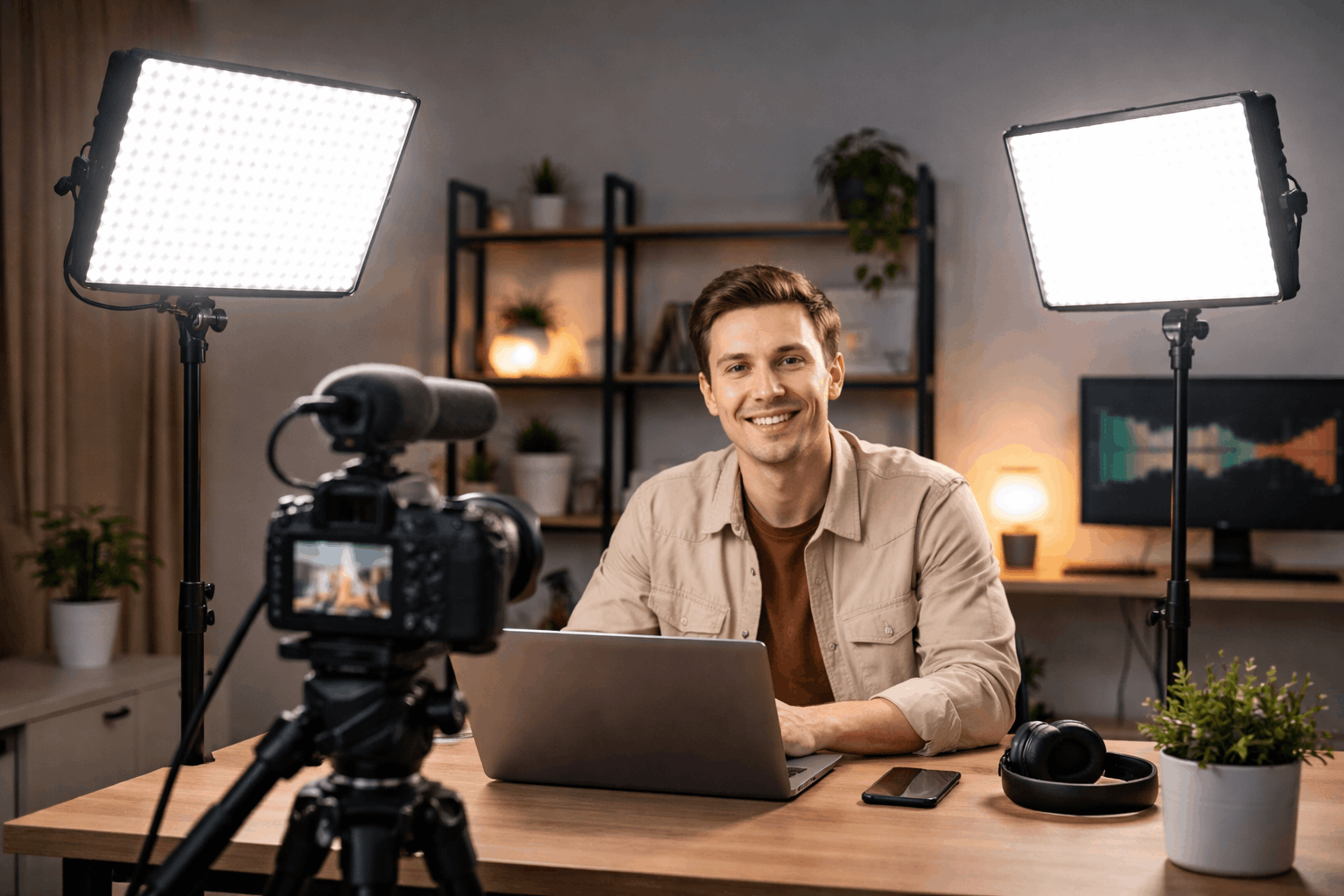
Keeping lighting safe and comfortable
Avoid pointing a very bright panel directly into your eyes at close distance, because it can cause fatigue during longer sessions.
Keep cables tidy and stands stable, because a tipped light can break or damage other gear like microphones and webcams.
If you see flicker on video, adjust brightness settings or camera shutter options, because some panels behave differently at very low dim levels.
Conclusion
You can start with one LED panel light adjustable model, place it well, and get a cleaner image than most built-in room lighting.
As you compare options like a LED panel light board or a led panel light box, focus on control, comfort, and consistency over flashy extras.
If you want a short list of best LED panel lights for your budget range, use the specs and checklist above to filter choices fast.