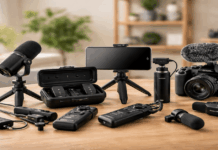
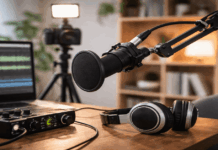
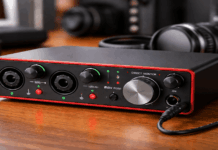
In most small setups, the microphone choice makes a bigger difference than a new camera body or a sharper lens.
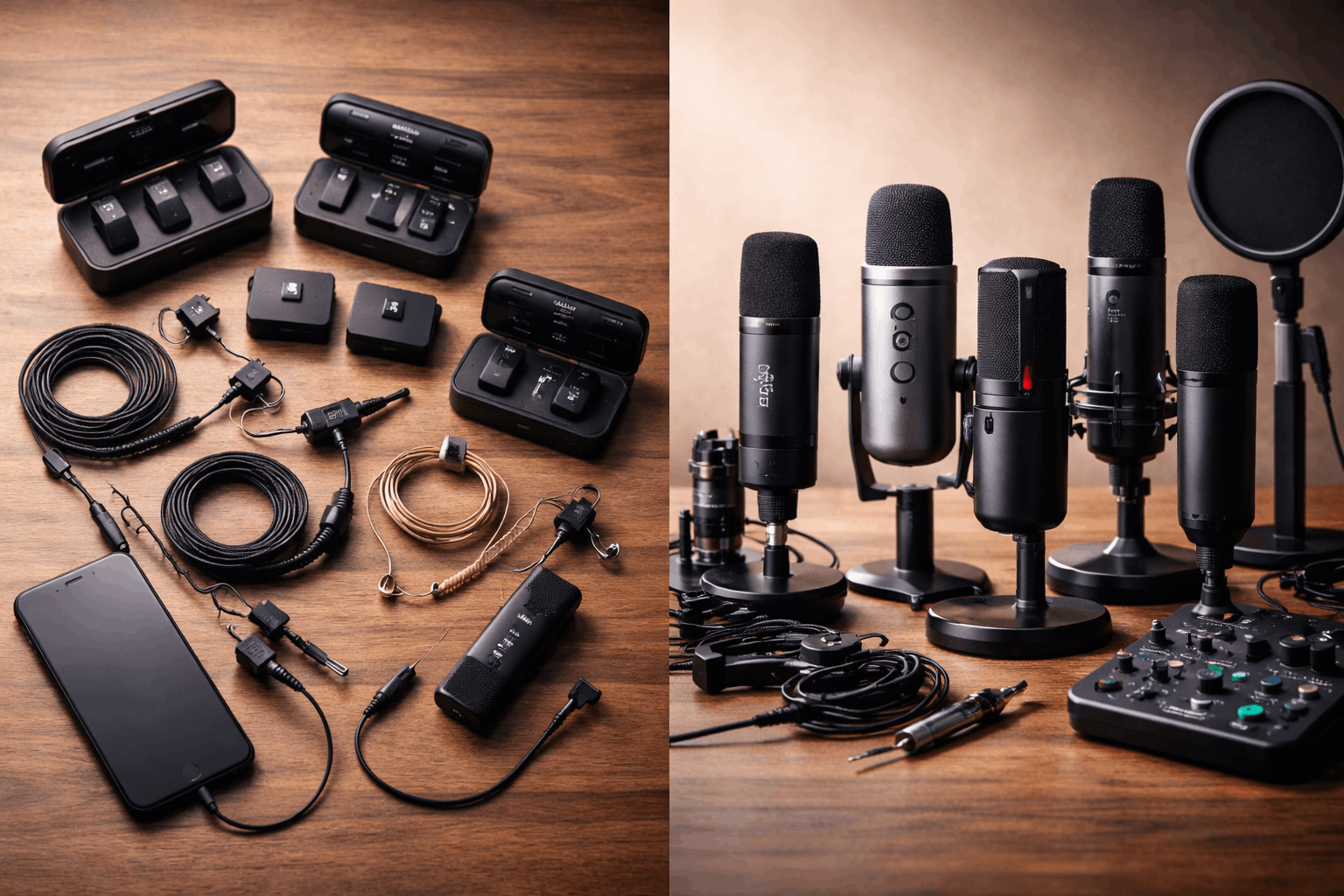
Two of the most common options are lavalier microphones (small mics you wear) and condenser microphones (typically desk or stand-mounted mics).
Both can deliver clear audio at home, but they solve different problems.
What a lavalier microphone is
A lavalier mic (lav) is a small microphone that clips to your shirt, collar, or jacket.
Because it sits close to your mouth, it captures your voice strongly even if you move around.
Lavs are popular in interviews, talking-head videos, and instructional content where you stand, demonstrate products, or walk around a room.
Typical strengths of lav mics
- Consistent voice level, even when you turn your head
- Freedom to move without staying near a desk mic
- Smaller footprint on camera and in your workspace
Common trade-offs
- Clothing noise and cable rustle if placement is sloppy
- Slightly “thinner” sound compared with larger mics (varies by model)
- Wireless systems add cost and setup steps
What a condenser microphone is
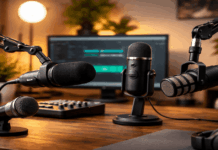
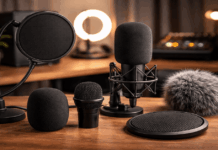
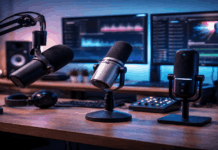
A condenser mic is usually mounted on a stand, arm, or small desktop tripod.
Condensers are known for capturing detail—voice texture, clarity, and nuance.
They’re common for voiceovers, podcasts, music, streaming, and sit-down content recorded at a desk.
Typical strengths of condenser mics
- Full, detailed voice sound when positioned well
- Great for desk setups where you stay near the mic
- Often easy to monitor and control levels
Common trade-offs
- Picks up more room sound (echo, fan noise, keyboard clicks)
- Requires consistent distance and positioning
- Can be visually prominent in frame depending on your style
Sound quality: “close voice” vs “room voice”
Most home audio problems come from the distance between your mouth and the mic and the sound of your room.
Lavaliers: close voice with less room
Because the mic sits close to your mouth, a lav naturally reduces the “roomy” sound.
That helps in untreated rooms with hard walls, tile floors, or big windows.
A lav can make a normal bedroom sound more like a controlled space, even without acoustic panels.
Condensers: detailed voice, but they hear everything
A condenser can sound excellent, but it will also capture more of your environment. In a quiet, soft-furnished room, that extra detail becomes a benefit.
In a reflective room, it can turn into reverb, computer noise, chair squeaks, and keyboard taps.
Practical setup differences at home
A wired lav is usually the simplest: clip it, set the input level, and record.
Wireless lavs add freedom but require battery checks, pairing, and interference awareness.
A condenser setup is about positioning and consistency. When it’s right, the sound can be very polished. When it’s wrong, you’ll hear the room.
Noise and room control: the hidden deciding factor
If your room is noisy or echoey, a lav often wins by default. If your room is quiet and soft, a condenser can shine.
Ask these questions:
Do you hear echo when you clap or speak loudly?
Is your computer fan audible in quiet moments?
Are there street sounds, other people, or pets nearby?
Do you type during recording?
Noisy/echoey room: a lav is usually more forgiving.
Quiet/treated room: a condenser can deliver a more studio-like sound.
Connectivity: phone, camera, or computer?
This is where many creators get stuck, because “microphone type” and “connection type” are different decisions.
Lavaliers
Many lavs are designed for phones (TRRS) or cameras (TRS). Wireless lav kits often output to camera or phone receivers
Adapters may be required depending on your device ports.
Condensers
USB condensers plug directly into a computer and are easy. XLR condensers need an audio interface or mixer, which adds cost and control
If you record mostly on a computer, a USB condenser is convenient.
If you record mostly on a phone or camera, a lav (wired or wireless) is often simpler.
Typical price ranges and what you get
You can get usable audio with either mic type at entry-level budgets, but the “feel” differs.
As budgets rise, both improve, but in different ways.
Higher-end lav systems improve wireless reliability, noise handling, and tonal balance.
Better condensers improve clarity and tone, but still require a good room and consistent placement.
Quick decision guide for home creators
Choose a lavalier microphone if:
- You film standing up, moving, or demonstrating things
- Your room is echoey or you can’t control background noise
- You want consistent voice level with minimal setup each time
- You record interviews or two-person content often
Choose a condenser microphone if:
- You film at a desk and stay in one position
- You want a fuller, richer voice sound for voiceovers or podcasts
- Your room is reasonably quiet (or you can soften it with rugs and curtains)
- You want a stable setup for streaming and long sessions
If you’re split between both styles, a common home-creator approach is:
- Lav for on-camera and movement
- Condenser for desk voiceovers and streaming
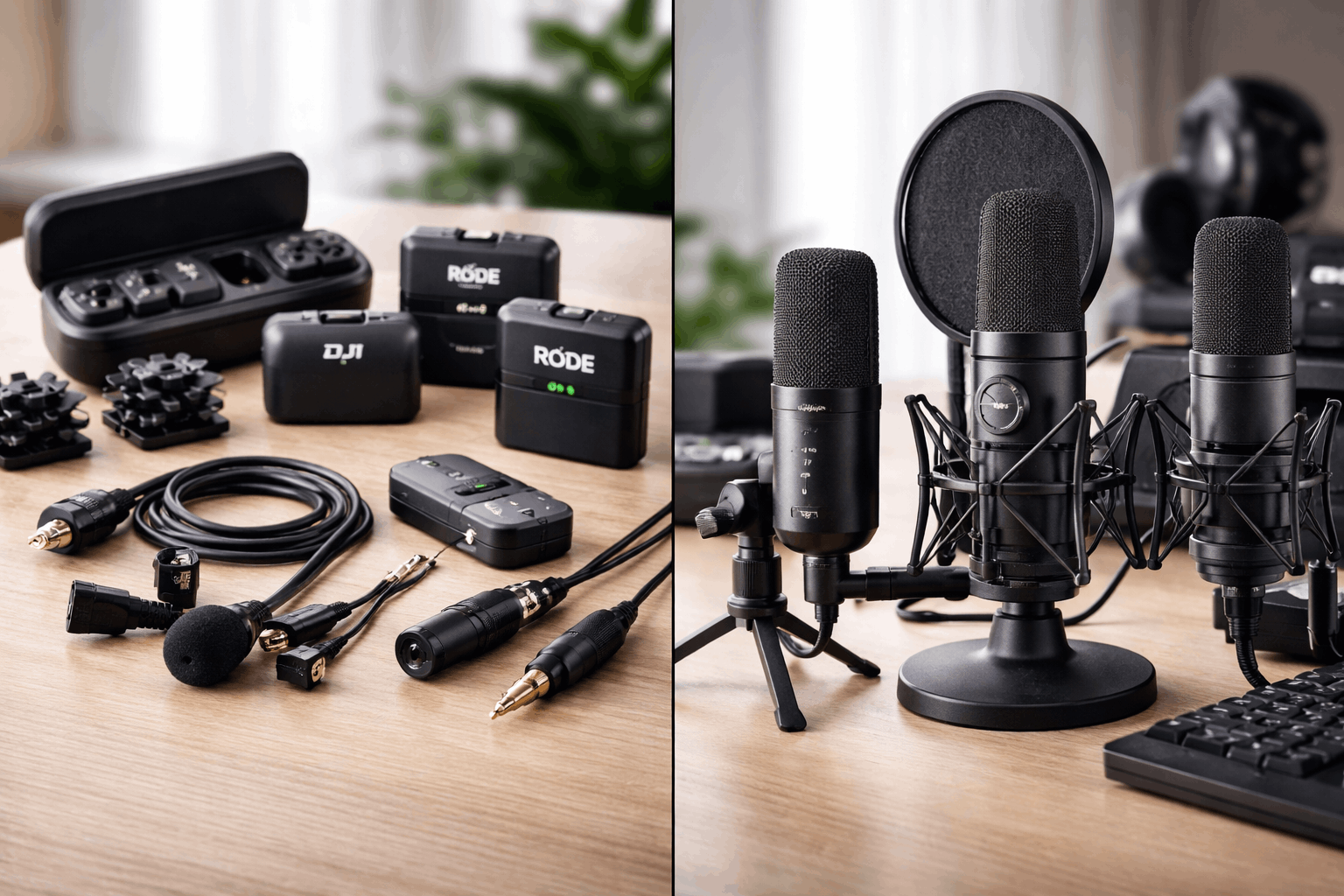
Best Options
Lavalier:
| Pick | Type | Best for | Typical price (USD) | Why it’s a strong option |
|---|---|---|---|---|
| BOYA BY-M1 | Wired lav (3.5mm) | Budget phone/camera audio | $16.99 | Cheapest “real lav” upgrade over built-in mics. |
| Shure MVL | Wired lav (TRRS) | Phone interviews, talking-head | $69.00 | Clean speech capture and simple plug-in setup. |
| RØDE Lavalier II | Wired lav (locking TRS) | Higher-quality dialog, on-camera | $95.92 | Low-profile mic head, solid voice tone for video. |
| Deity W.Lav Pro (kit) | Wired lav (pro-grade) | Cleaner dialog + hiding options | $89.95 | Good value for creators who want better placement control. |
| Hollyland LARK M2 Duo (Lightning kit) | Wireless clip-on | iPhone creators, 2-person shoots | $85.00 | Very low-cost wireless for vlogs/interviews. |
| DJI Mic 2 (system) | Wireless clip-on | Run-and-gun video + backups | $269.99 | Strong “creator kit” with robust wireless workflow. |
| RØDE Wireless GO II (kit w/ case) | Wireless clip-on | 2-person content, simple setup | $263.99 | Popular, straightforward wireless for creators. |
Condenser:
| Pick | Connection | Best for | Typical price (USD) | Why it’s a strong option |
|---|---|---|---|---|
| FIFINE K669B | USB | Budget voiceovers, starter setup | $29.99 | Low cost, quick plug-and-play for decent voice quality. |
| Blue Yeti | USB | Versatile patterns, general creator use | $97.00 | Easy “all-in-one” USB mic for many use cases. |
| HyperX QuadCast 2 | USB | Streaming + quick controls | $111.99 | Strong feature set for creators who want convenience. |
| Elgato Wave:3 | USB | Streaming + software mixing | $119.99 | Great for creators who want simple level control + routing. |
| Audio-Technica AT2020USB-X | USB-C | Clear voice, “set-and-forget” recording | $169.00 | Reliable sound and a clean, creator-friendly USB setup. |
| RØDE NT-USB+ | USB-C | Cleaner “studio-style” voice in USB | $179.95 | Solid upgrade pick for home narration and talking-head. |
| Audio-Technica AT2020 (XLR) | XLR | Budget home studio + future upgrades | $119.00 | Good entry XLR condenser if you plan to add an interface. |
| RØDE NT1 (5th Gen) | USB + XLR | Best “grow with you” mic | $246.99 | Flexible connectivity for creators who may go pro later. |
Conclusion
Lavalier and condenser microphones both work for home creators, but they win in different conditions.
A lav prioritizes consistency and mobility, keeping your voice strong even in imperfect rooms.
A condenser prioritizes tone and detail, rewarding creators who can control distance, positioning, and background noise.