This guide compares continuous light and natural light for home recording, with practical advice that fits simple creator setups.
What “Good Lighting” Does for Home Video
Lighting controls how your face looks on camera, how readable your background is, and how clean your image appears after compression.
Even a good webcam can look noisy and dull if the scene is too dark, because the camera increases gain and introduces grain.
Better lighting usually means lower noise, sharper detail, more accurate colors, and fewer harsh shadows.
It also reduces the amount of work you need in editing, since you are not trying to rescue exposure and color in post.
For everyday creators
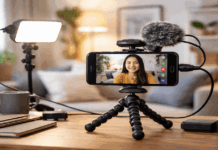
Lighting is part of a basic trio: camera/webcam + microphone + stable support.
A clear mic makes your voice pleasant, a tripod keeps framing steady, and lighting makes your video look intentional.
If you fix only one visual thing, make it the light.
Continuous Light: What It Is and Why Creators Like It
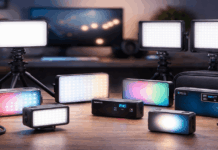
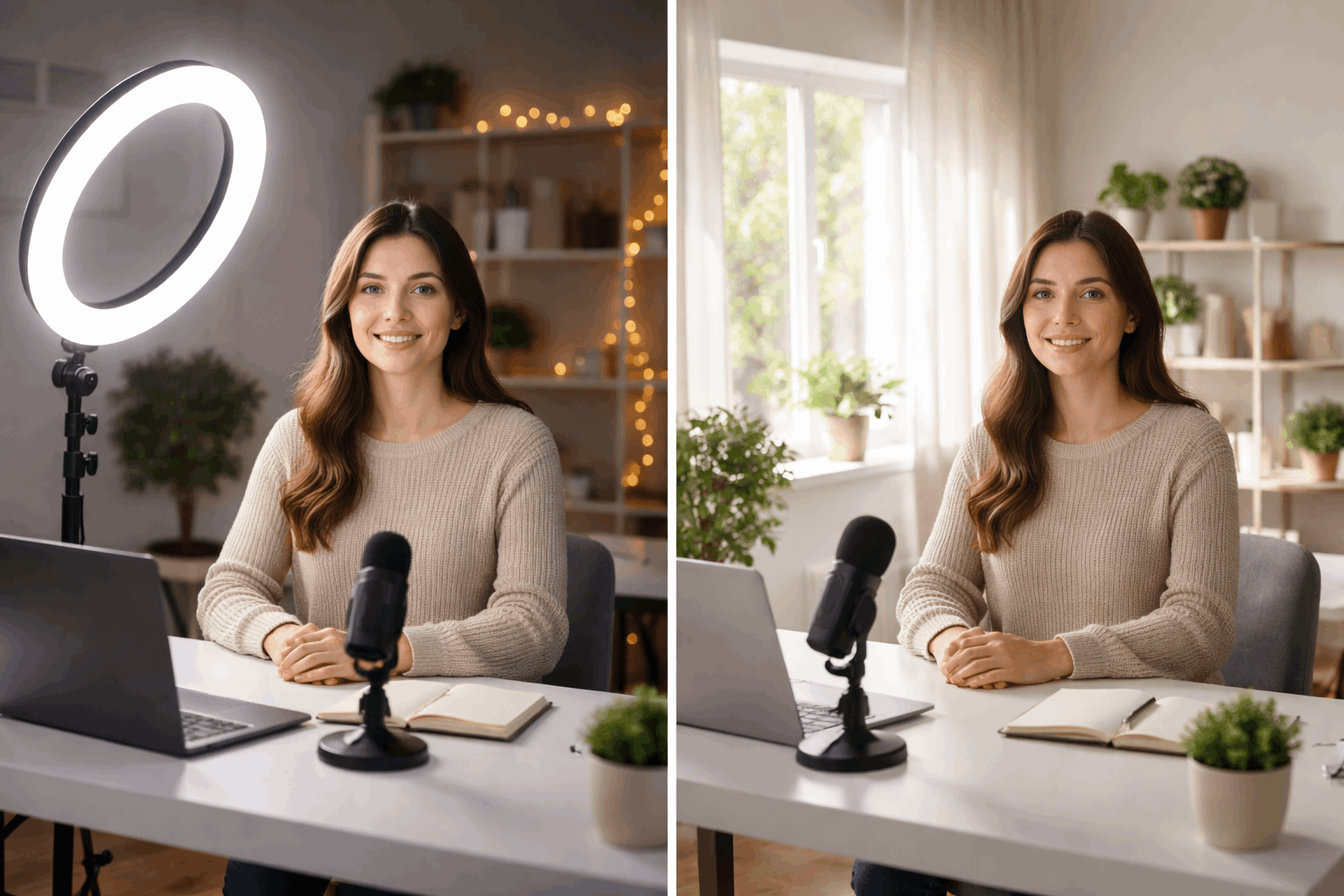
Continuous light means a constant, powered light source—typically LED—such as a ring light, LED panel, tube light, or small key light.
Unlike flash photography, the light stays on while you record, so you see exactly what the camera sees in real time.
Strengths of Continuous Light at Home
Consistency is the biggest advantage. Once you set brightness and placement, your lighting stays the same whether you record at 9 a.m. or 11 p.m.
Continuous lights also give you control. You can move the light closer for softer illumination or tilt it slightly to reduce shadows.
A steady key light gives your sensor more to work with, which can make your video look cleaner even at the same resolution.
Weaknesses to Watch For
Continuous light can create a “lit” look if placed poorly. A ring light straight in front can flatten the face and produce circular reflections in glasses.
Heat is less of an issue with LEDs than older bulbs, but bright lights can still feel uncomfortable if you are close to them.
Finally, continuous lighting adds gear, cables, and setup time, which can matter if you record in a shared space.
Natural Light: When a Window Can Be the Perfect Key Light
Natural light usually means sunlight coming through a window, sometimes softened by curtains.
Many creators love it because it can look flattering and “real,” especially for lifestyle, vlogs, and casual content.
Strengths of Natural Light at Home
The biggest advantage is cost. If you have a decent window, you can achieve an attractive look with no equipment purchase.
Window light can be naturally soft, especially on overcast days, and it can wrap around the face in a way that feels cinematic.
If you are starting out and learning framing, audio placement, and camera settings, natural light keeps things simple.
Weaknesses to Watch For
Natural light is unpredictable. The sun moves, clouds shift, and the brightness changes during your recording.
That means your exposure can drift, your skin tone can change, and your background can suddenly blow out.
Natural light is also harder to standardize. If you care about consistent branding, or you record at night, relying on daylight may not fit your schedule.
Continuous Light vs Natural Light: A Practical Comparison
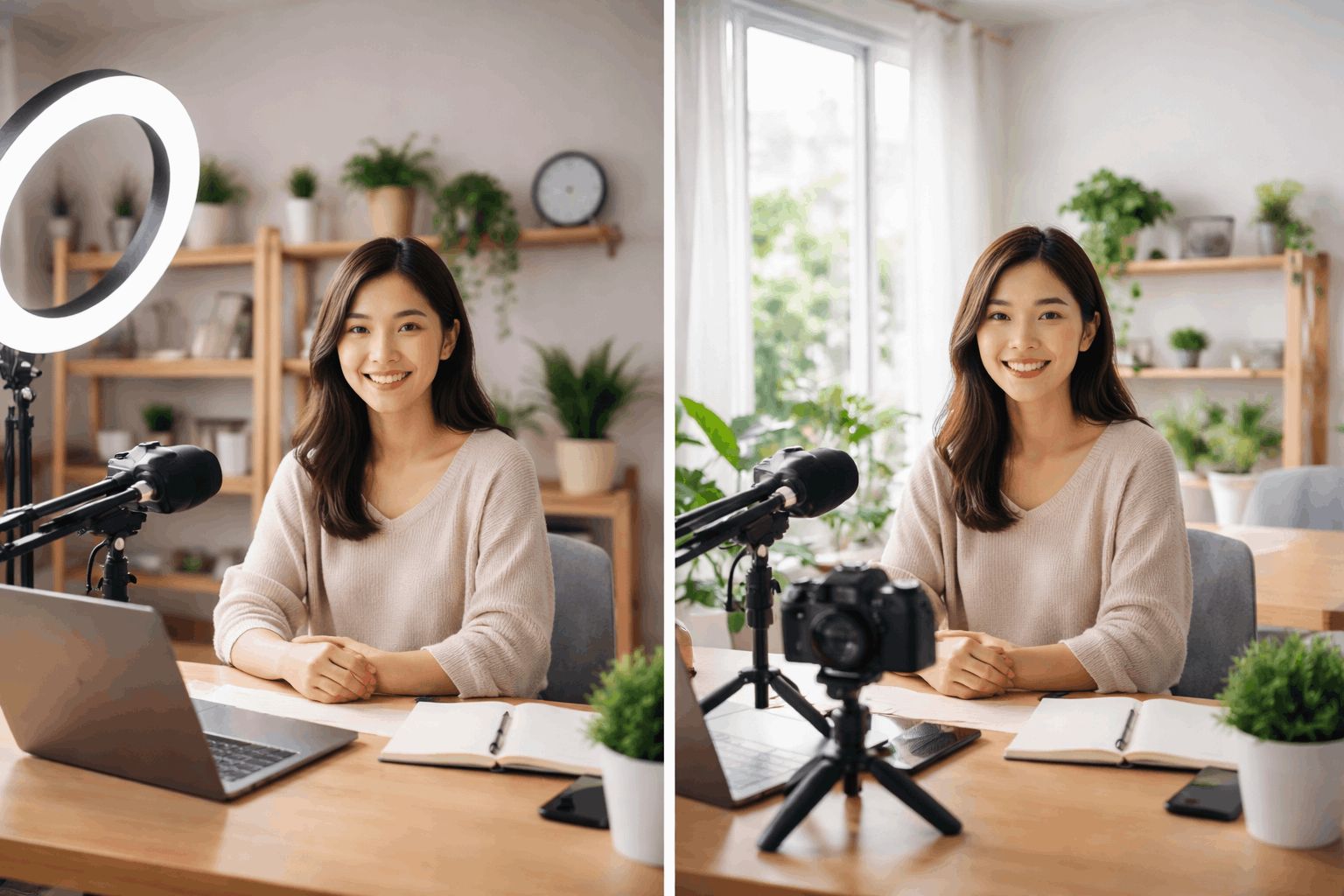
Choose continuous light if you need repeatability. If you record after work, batch videos on weekends, or want the same look every time.
Choose natural light if you record casually and can chase good conditions. If your schedule is flexible and you like a natural, lifestyle feel.
Best option for many creators: use both.
Natural light can be your main light when available, while a small continuous light fills shadows or acts as a backup when clouds roll in.
How to Set Up Natural Light for Better Results
- Face the window. Put your camera between you and the window, with the window lighting your face. This avoids the dark “silhouette” effect.
- Soften the light. If the light is harsh, use a sheer curtain, blinds, or a white sheet to diffuse it.
- Control the background. If the window is in the background, it will often blow out. Rotate your setup so the window is to the side or in front.
- Lock exposure if possible. Many webcams and camera apps allow exposure lock. This prevents your face from brightening and darkening constantly.
- Record in consistent conditions. Overcast days are often more stable than sunny days with moving clouds.
How to Set Up Continuous Light for a Clean “Home Studio” Look
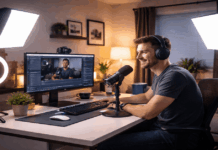
- Use a key light at a slight angle. Place the light about 30–45 degrees to one side of your camera and slightly above eye level. This creates shape without harsh shadows.
- Keep the light close for softness. A larger light source relative to your face looks softer. Moving the light closer often improves the look more than increasing brightness.
- Watch reflections. If you wear glasses, raise the light slightly or move it off-axis so reflections are not visible.
- Match color temperature. If your key light is “daylight” but your room lights are warm, your camera can struggle. Turn off competing lights or match temperatures.
- Add simple fill and separation. A second small light or even a white wall can bounce light into shadows. A dim background lamp can help separate you from the backdrop without looking like a studio.
Lighting Choices That Pair Well With Your Gear
If you use a webcam, lighting matters even more because webcams have smaller sensors and rely heavily on good illumination.
Pair a webcam with a continuous key light for consistent clarity.
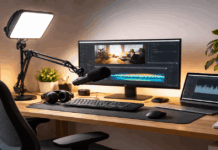
If you record with a USB microphone, keep the light placement in mind so your mic does not cast odd shadows on your face.
If you use a tripod, lock your framing and then adjust lighting around it rather than moving everything constantly.
Which One Should You Choose?
If your home space has a good window and you record during daylight hours, natural light is a strong starting point.
If your content schedule is unpredictable, you record at night, or you want consistent results, continuous light is the better long-term investment.
Many creators end up combining them—using window light when it’s great and switching to LED when it isn’t.