Recording a podcast at home can sound professional if you pick the right mic for your room, voice, and setup.
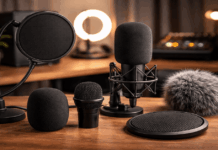
Dynamic mics usually reject more background noise, while condenser mics often capture more detail but also more of the room.
That’s why many “broadcast-style” podcast mics are dynamic, while many “creator” USB mics are condenser.
How to choose the best microphones for podcasting
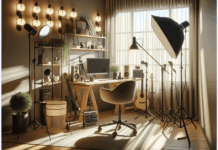
If you only remember one thing, remember this: your room matters as much as the microphone.
In a quiet, treated room, a condenser can sound open and clean.
In a normal bedroom or office, a dynamic mic can save you time because it naturally picks up less room sound when used close to your mouth.
Here’s the simplest buying logic (no long checklist).
- If you want plug-and-play and you record solo: start with a USB mic.
- If you want easy upgrades later (or you record with guests): choose a mic that supports XLR, or go straight to an XLR mic + audio interface.
- If your room is noisy or echoey: lean dynamic and speak close to the mic (about a fist’s distance).
- If your room is controlled and you want a more detailed sound: a condenser can be a great fit.
The picks below are grouped by the problems they solve in typical home setups.
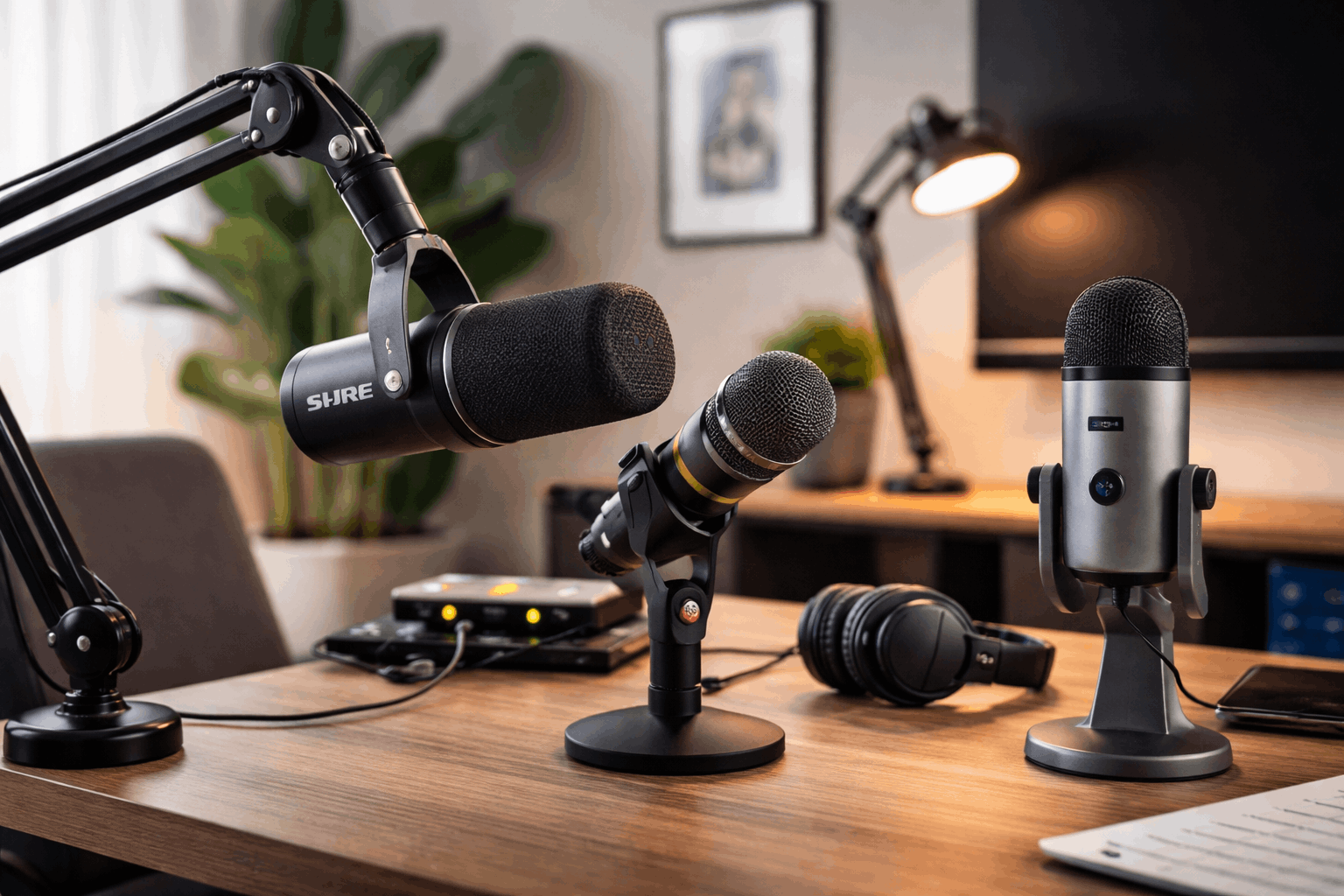
Best all-around “grow with you” mic: Shure MV7+ (USB-C/XLR)
If you want one microphone that starts as USB and still makes sense when you later buy an interface, the Shure MV7+ is a strong anchor.
It’s a dynamic mic with USB-C and XLR, built for spoken word and close mic use, which is a common need in home podcasting.
Good for: solo podcasters, creators who plan to upgrade, rooms that aren’t perfectly quiet.
Why it works at home
You can start with USB and keep your workflow simple, then move to XLR if you expand your setup.
For creators who record in untreated rooms, that “broadcast dynamic” approach often makes editing easier.
Best XLR value for a “real podcast” chain: Shure MV7X (XLR-only)
If you already have (or plan to buy) an audio interface, the MV7X is the lower-cost path into the MV7-style sound without paying for the USB features.
B&H lists the MV7X at $199, and also describes it as a cardioid dynamic mic designed to minimize room pickup.
This is a great fit for a two-mic setup later (two guests, co-hosting, interviews) because XLR chains scale well.
Good for: podcasters ready for XLR, multi-mic recording, louder rooms where rejection matters.
Best creator-friendly USB mic with simple control: Elgato Wave:3
The Elgato Wave:3 ($149.99) is popular with everyday creators because it’s easy to run and integrates well into typical desk setups.
If you’re building a creator desk with a webcam, lighting, and a clean audio chain, Wave:3 fits that “simple but capable” lane.
Best Buy also describes it as a cardioid USB-C condenser mic and notes core specs like frequency response and desktop-stand inclusion.
Good for: solo shows, streaming + podcasting crossover, creators who want a clean desk workflow.
Best “classic USB” option for flexible pickup patterns: Blue Yeti
The Blue Yeti is a long-running USB standard because it gives multiple pickup patterns in one mic.
This can be useful if you’re experimenting with formats (solo vs. two people around a desk).
Best Buy lists the Yeti at $109.99 (pricing varies by color and promos).
Good for: creators testing formats, desk recording, and people who want a familiar USB solution.
Home warning
Multi-pattern condenser mics can capture more room sound if you sit too far away.
If you choose a Yeti, treat it like a “close mic”: keep it near your mouth, lower the gain, and reduce reflections where possible.
Best USB condenser for clean spoken-word detail: Audio-Technica AT2020USB-X
If you want a USB condenser that’s commonly used for voice and has a straightforward “record clean audio” goal, the AT2020USB-X is a safe pick.
B&H lists it at $169 and highlights its cardioid pattern and plug-and-play USB-C operation.
This is a strong option when your room is reasonably controlled, or when you can record close enough to keep the voice dominant.
It also works well for creators who do both podcasting and basic vocal recording.
Good for: clean solo recording, voiceovers, home studios that aren’t too echoey.
Best USB mic for “podcast + phone/tablet” flexibility: RØDE NT-USB+
If you like the idea of recording on a laptop but also want compatibility with mobile devices, the RØDE NT-USB+ is worth a look.
B&H lists the NT-USB+ at $166.90 and notes it has a class-compliant USB-C connector and is intended for podcasting and voice work.
This is a condenser-style choice, so it rewards a quieter room and good mic technique. If your space is lively, use soft furnishings and keep the mic close.
Good for: creators recording across devices, spoken word with a “clear condenser” tone.
Best cheap microphones for podcasting (two strong budget picks)
If price is the main constraint, you can still get usable podcast audio—especially if you control distance and background noise.
The best microphones for podcast recording don’t need to be expensive.
Samson Q2U (USB + XLR starter pack)
The Samson Q2U is a common beginner recommendation because it supports both USB and XLR and is sold as a practical bundle.
Sweetwater lists the Q2U Recording & Podcasting Pack at $79.99.
This is one of the clearest answers when people ask for the best cheap microphones for podcasting while still wanting an upgrade path.
FIFINE AM8 (low-cost dynamic USB + XLR)
For an even lower entry price, FIFINE’s AM8 is positioned as a USB/XLR dynamic mic, and FIFINE lists it at $54.99.
At this budget, expect to spend extra attention on positioning and plosives, but it can still be a workable home mic for spoken word.
Good for: first-time podcasters, tight budgets, simple desk setups, learning mic technique.
Best budget XLR “broadcast” mic: RØDE PodMic
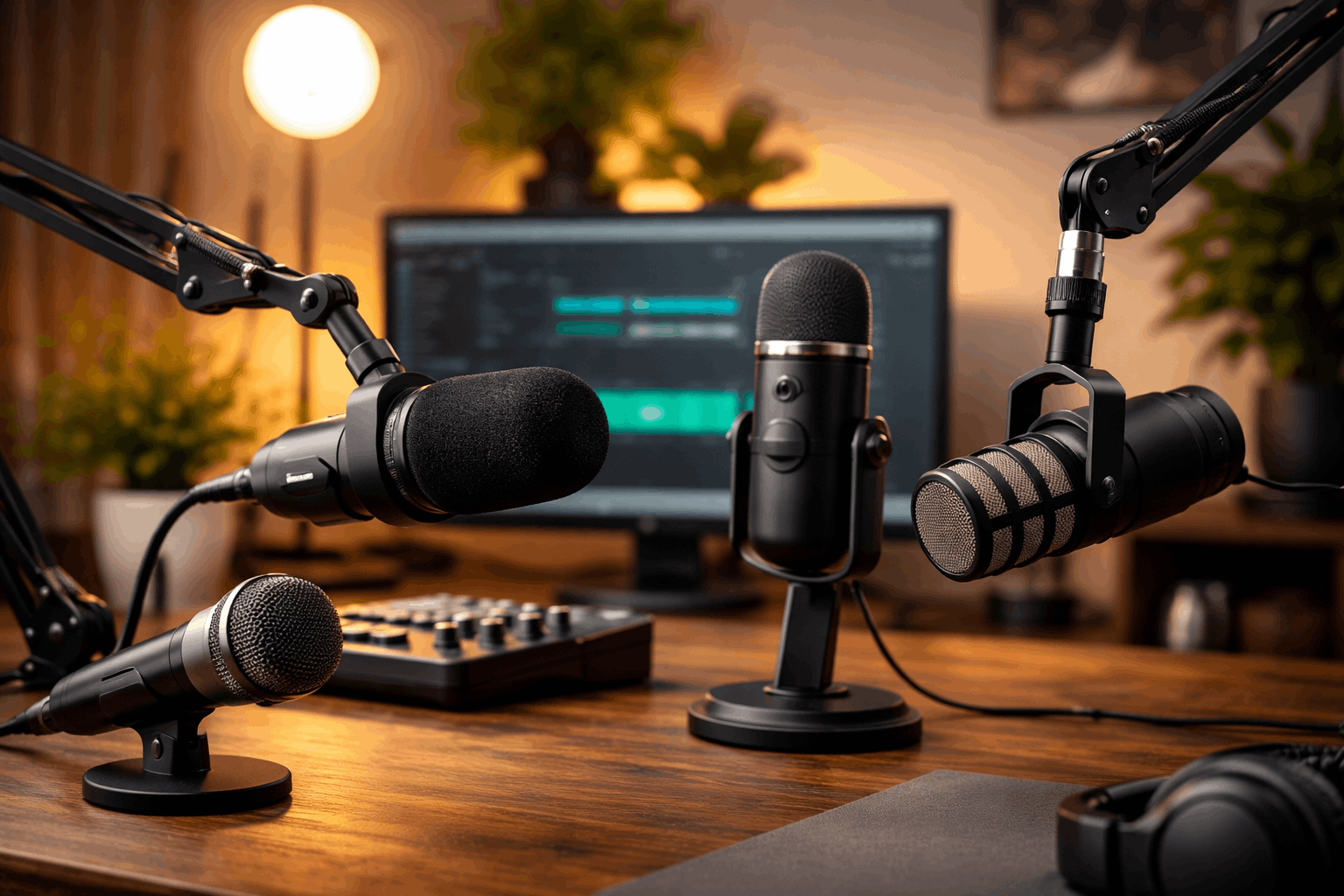
If you want the broadcast-style dynamic approach but you’re building an interface-based setup, the RØDE PodMic is a known value pick.
This is a straightforward XLR mic choice when you want a solid body, close-mic sound, and a price that makes multi-mic setups realistic.
Good for: XLR setups on a budget, co-hosting, and untreated rooms where dynamics help.
Conclusion
If you’re searching for the best microphones for podcast beginners, start with the Samson Q2U for the easiest “buy once, learn fast” path.
If you want one long-term mic that works in USB today and XLR tomorrow, the Shure MV7+ is the most flexible all-around choice in this list.
If you’re building a creator desk and want a clean USB solution, the Elgato Wave:3 is a practical fit.