Best entry-level microphones usually the biggest “quality jump” you can make in a simple home setup.
Especially if you record voice for YouTube, streaming, podcasts, or tutorials.
The goal at the entry level is not perfection—it’s clear speech, low hassle, and a mic that fits your room and workflow.
What “entry-level” should mean for creators
Most everyday creators need three things: consistent vocal clarity, easy connection, and basic noise control.
USB mics are typically the simplest because they plug straight into a computer.
XLR mics usually need an audio interface or mixer, but they can be easier to upgrade later.
Dynamic mics can be more forgiving in noisy rooms, while condenser mics can capture more detail (and more room sound).
Match the mic to your space
If your room is untreated and noisy (fans, traffic, keyboard), start with a dynamic option.
If your room is quiet and you want extra detail for voiceovers, a condenser can sound more “open.”
If you want the fewest moving parts, go USB first.
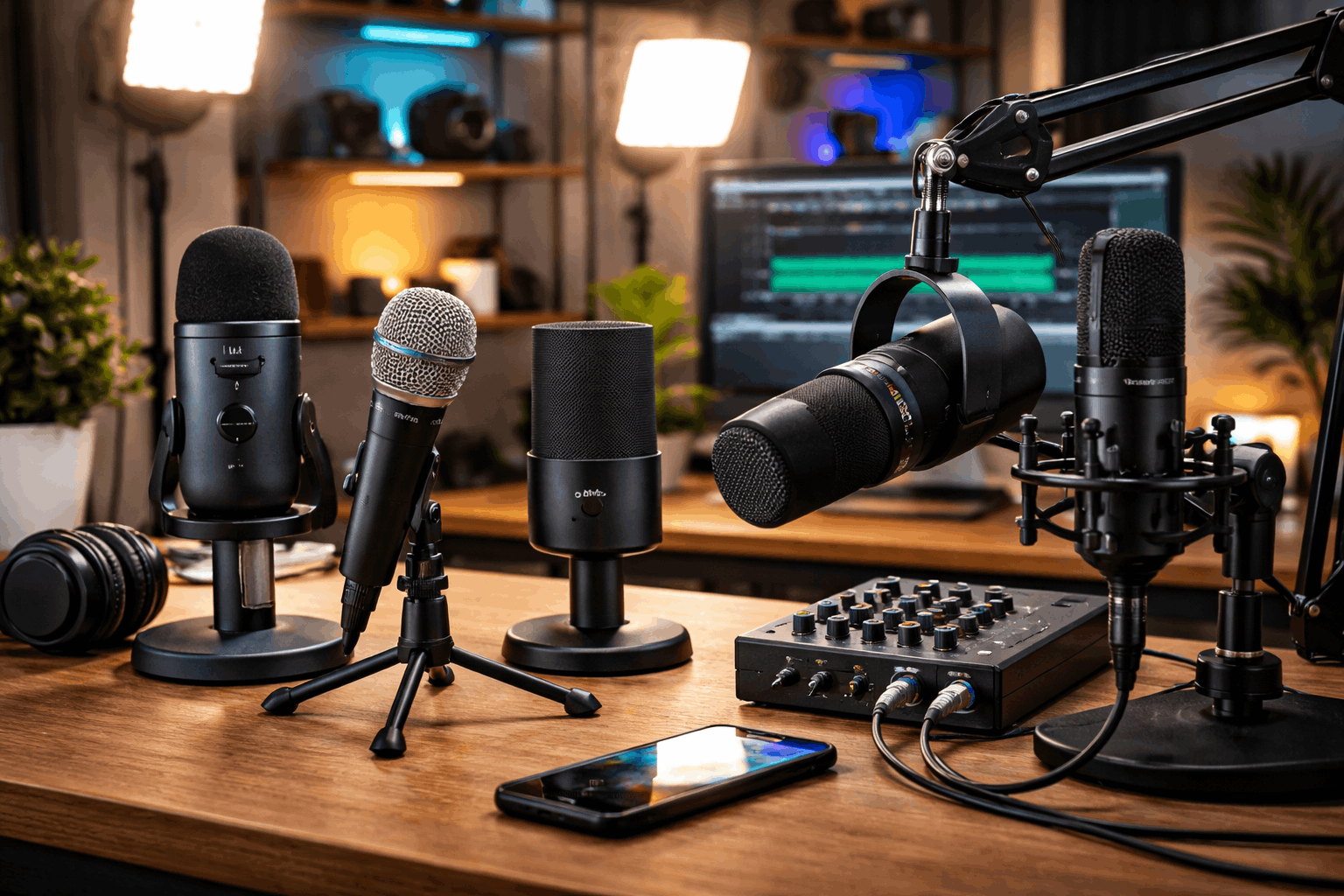
Entry level microphone for streaming: what matters most
For streaming, best entry-level microphones must handle real-time talking while you type, click, and react.
That’s why many people prioritize a mic that can reduce side noise and doesn’t require complicated gain staging.
The simplest path is a solid USB mic with good monitoring controls, or a USB/XLR hybrid that lets you grow into a bigger setup.
The RØDE NT-USB Mini is widely sold as a compact USB mic “designed for podcasting and streaming,” and it commonly appears in B&H around $102.
Best entry level condenser mic: two strong starting points
If you’re aiming for clean voiceovers, tutorials, or talking-head videos in a quieter room, condenser mics are a common pick.
They tend to capture more detail, which can sound great—but they can also pick up more room reflections if you’re far from the mic.
Audio-Technica AT2020 (XLR) is one of the most common entry-level condenser choices, often listed around $119 in B&H.
If you want a condenser with a simpler connection, the Audio-Technica AT2020USB-X is a USB model positioned for podcasters and streamers.
Best entry level podcast microphone: prioritize voice consistency
A good entry-level podcast mic should sound stable even if you lean back slightly, and it should help you avoid capturing too much room noise.
The Samson Q2U is a popular starter choice because it supports both USB and XLR, letting you start simple and upgrade later.
B&H commonly lists the Q2U around $99.99. For many beginners, that flexibility is the point.
If you want a compact USB mic for podcasting, the RØDE NT-USB Mini is frequently chosen for small desks and simple setups, often listed around $102.
Best entry level dynamic microphone: when your room is noisy
Dynamic mics are often recommended for untreated rooms because they can be less sensitive to distant noise compared with many condensers.
In practical terms, they can help when you’re close to the mic but your environment is not ideal.
The RØDE PodMic is an XLR dynamic mic that B&H positions for speech and broadcast-style work, and it commonly lists around $99.
Another dependable standard is the Shure SM58, which is widely stocked and often listed around $109.
A practical “starter kit” mindset for everyday setups
You don’t need a complicated chain to get clean audio. The most reliable improvements usually come from:
- Distance: keep the mic close (consistent voice level).
- Placement: avoid aiming the mic at loud sources (PC fans, windows).
- Control: use a basic stand/arm so the mic stays where you want it.
If you want the simplest path, a USB mic like the RØDE NT-USB Mini ($102) or Blue Yeti keeps the setup minimal.
If you want a creator-focused USB mic with higher-resolution recording listed and a strong streaming reputation, the Elgato Wave:3 is often picked.
And if you want one mic that can start USB and later run XLR, the Samson Q2U is one of the more accessible “grow-with-you” options.
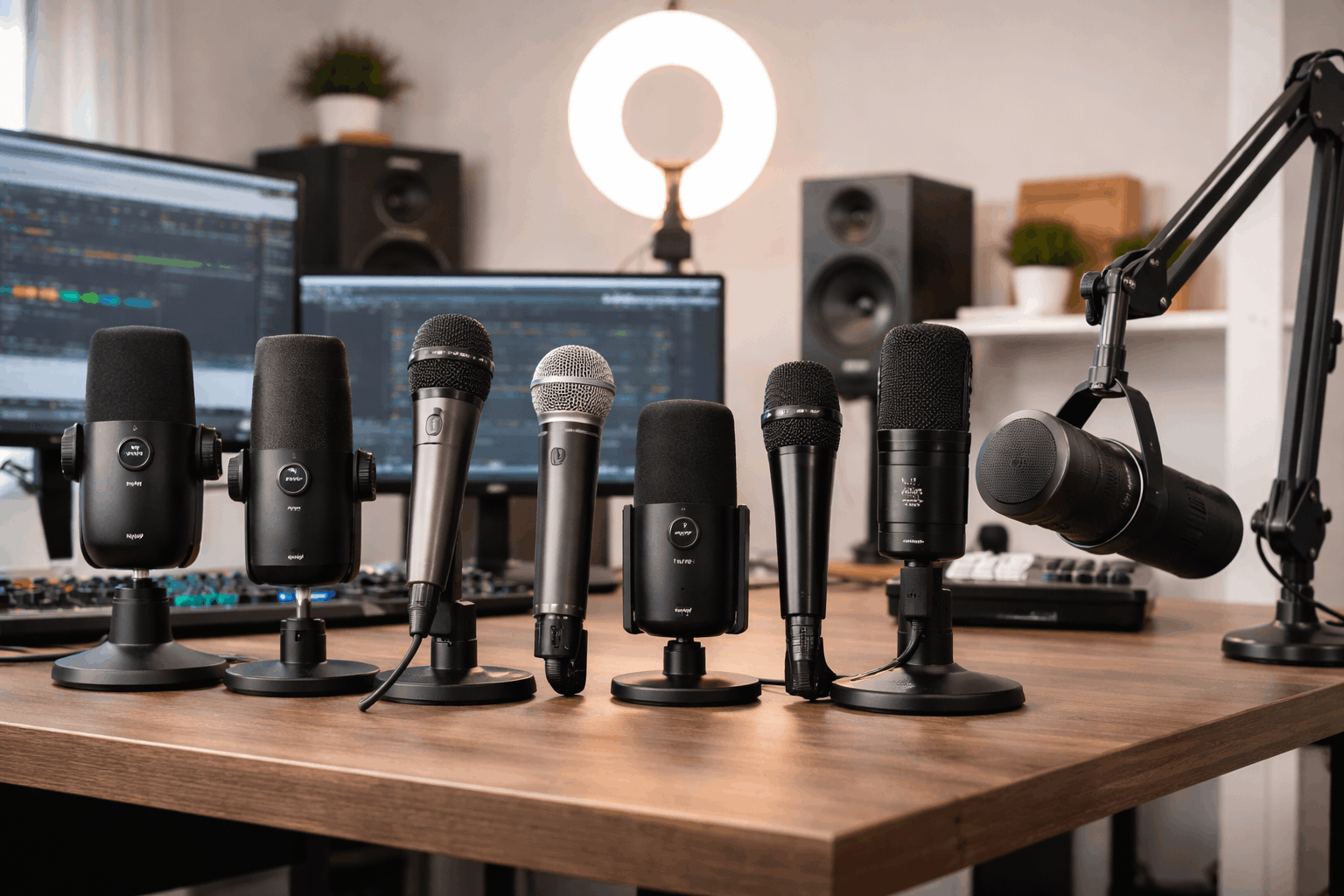
Best Entry-Level Microphones: Pros and Cons
| Microphone | Type / Connection | Pros | Cons |
|---|---|---|---|
| RØDE NT-USB Mini | Condenser / USB | Very simple plug-and-play setup; compact for small desks; good for streaming/podcasts on a basic home rig | Can pick up more room sound than many dynamics; limited upgrade path compared with XLR rigs |
| Blue Yeti | Condenser / USB | Flexible for different recording situations (often chosen for multi-person or varied setups); easy USB start | Physically bulky on many desks; can capture room noise easily if your space is untreated |
| Elgato Wave:3 | Condenser / USB | Built for creator workflows; strong choice for an entry level microphone for streaming with a clean USB setup | USB-only limits upgrading to XLR chains later; condenser sensitivity can reveal room reflections |
| Samson Q2U | Dynamic / USB + XLR | Great “grow-with-you” option: start USB now, move to XLR later; dynamic style can be more forgiving in noisy rooms | Usually needs careful positioning (close to mouth) for best results; if using XLR you’ll need an interface/mixer |
| Audio-Technica AT2020 (XLR) | Condenser / XLR | Well-known budget XLR condenser; good detail for voiceovers in quieter rooms; easy to integrate into a future upgrade setup | Requires an audio interface (extra cost); condenser sound can capture more room noise if your space is echoey |
| Audio-Technica AT2020USB-X | Condenser / USB | Condenser clarity with a direct USB workflow; simple for creators who don’t want extra gear | USB-only reduces long-term flexibility vs full XLR chains; room acoustics matter more with condensers |
| RØDE PodMic (XLR) | Dynamic / XLR | Popular “broadcast-style” dynamic sound; often works well in everyday rooms; good for podcast voice when used close | Needs an interface and often benefits from decent gain; not as “airy” as a condenser for voiceovers |
| Shure SM58 (XLR) | Dynamic / XLR | Durable and widely supported; forgiving for imperfect rooms; reliable entry point for a best entry level dynamic microphone style setup | Needs an interface; may require more gain than some condensers; not designed specifically as a studio voiceover mic |
| Shure MV7+ | Dynamic / USB + XLR | Flexible connection (USB now, XLR later); strong for spoken voice; dynamic style helps in noisy spaces | Costs more than most entry-level options; to use XLR you still need an interface |
| RØDE NT-USB+ | Condenser / USB | Easy USB workflow with a more “modern” creator focus; good for spoken voice when your room is controlled | Condenser sensitivity can highlight room echo/noise; USB-only limits expansion into XLR-only rigs |
Final takeaway
If you’re building a simple home setup, start with the mic that matches your room and workflow, then keep it close and consistent.
USB for ease, dynamic for noisier rooms, condenser for detail, and USB/XLR hybrids for upgrade flexibility.
Best entry-level microphones must content your budget and whether your room is noisy or quiet.